
Ever wondered about the odds of your lottery ticket winning, or how likely it is for your favorite team to secure victory? Probability isn't just for mathematicians; it's a fundamental tool for understanding the world around us and making smarter decisions.
Key Takeaways
- 1Discover top YouTube videos for learning basic probability theory.
- 2Understand core concepts like chance, sample spaces, and outcomes.
- 3Learn the rules for combining probabilities of events.
- 4See how probability applies to everyday decision-making.
- 5Build a stronger foundation for logical reasoning and data interpretation.
Who this is for
- If you're struggling to grasp statistical concepts for school or work
- If you want to make more informed decisions in your daily life
- If you're a curious learner looking to demystify chance and uncertainty
Start Learning with AI-Powered Video Summaries
Get instant summaries, ask questions, and turn any video into an interactive study session.
Try Querivo Free →Demystifying Chance: From Coin Flips to Real-World Odds
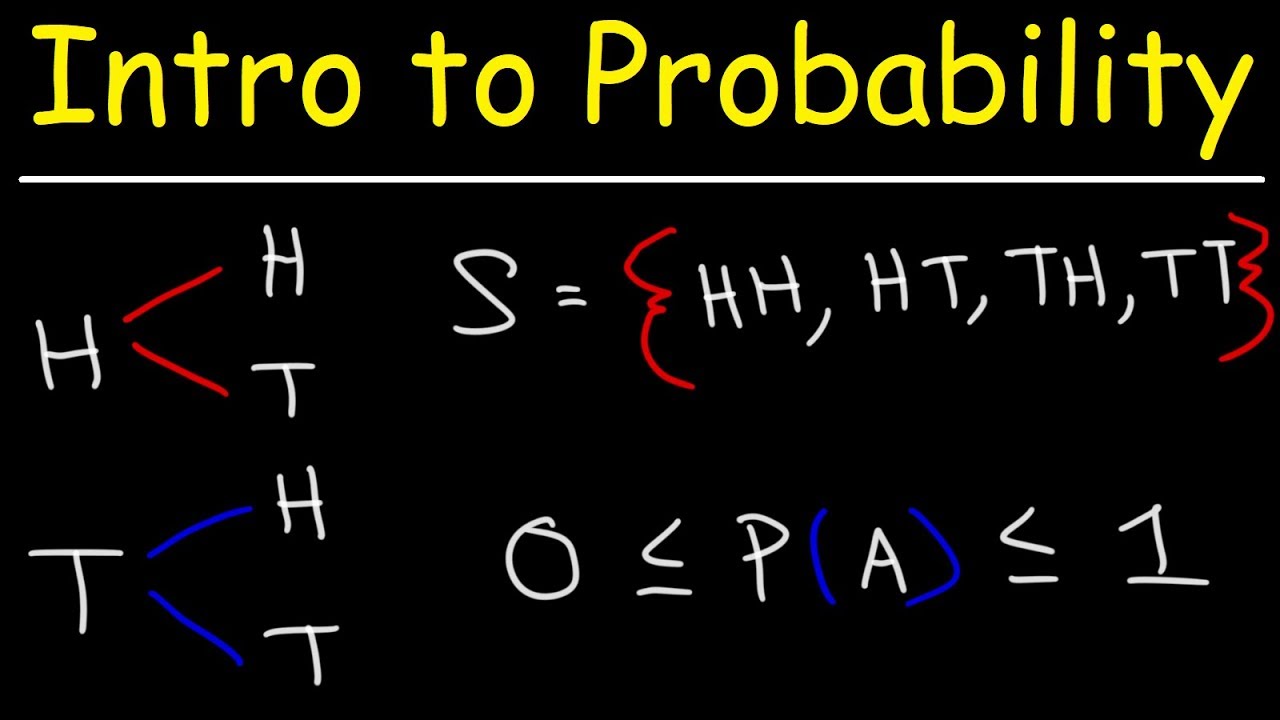
Understanding the basic concept of probability is your first step into the fascinating world of chance. It's all about quantifying likelihood – how likely is it that something will happen? This video lays the groundwork by explaining what probability actually is, and importantly, how we measure it. You'll learn to define it as a simple ratio: the number of outcomes you're interested in divided by all the possible outcomes that could occur. It's surprisingly straightforward, and once you get this, the rest clicks into place.
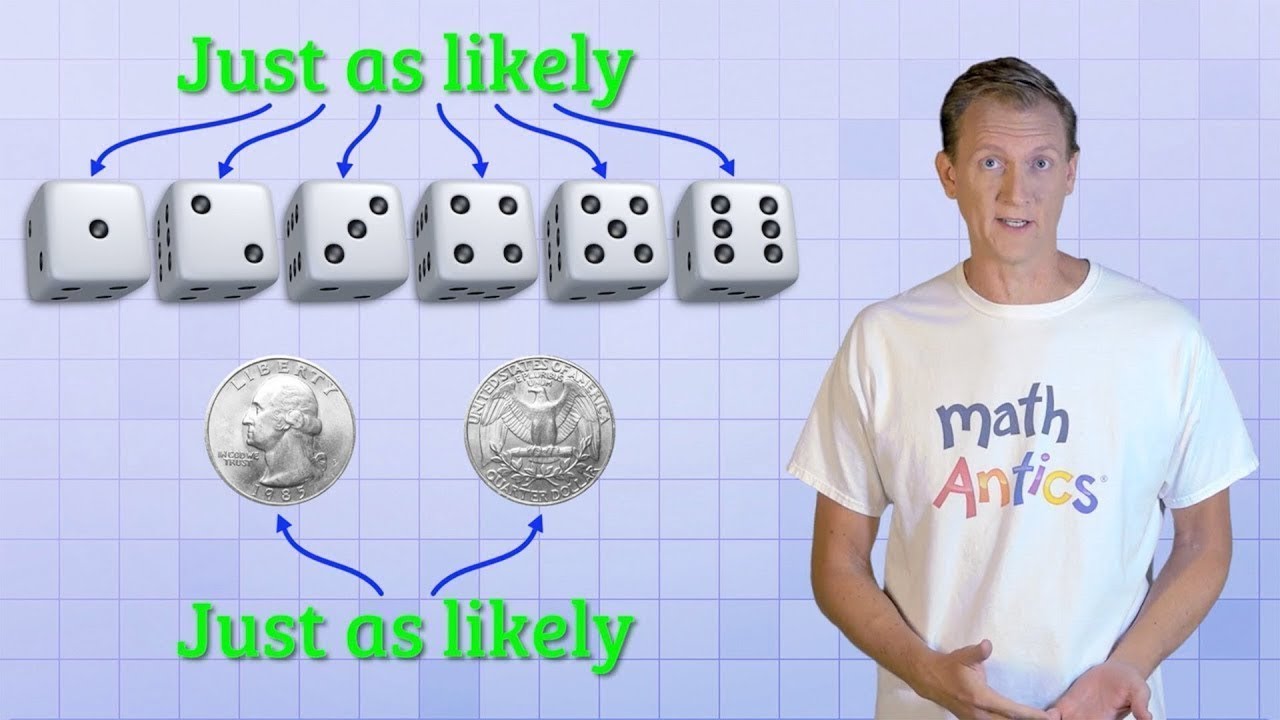
The creator also introduces the concept of a sample space, which is just a fancy way of saying all the possible results of an event. Think about flipping a coin; the sample space is just heads or tails. For rolling a single die, it's the numbers 1 through 6. Understanding this sample space is crucial for accurately calculating probabilities. Plus, you'll pick up on some fundamental rules, like the fact that probabilities always fall between 0 (impossible) and 1 (certain), and that all the probabilities within a sample space must add up to exactly 1. This video is a really solid introduction for anyone new to the topic.
- Probability is the ratio of favorable outcomes to total possible outcomes.
- Master calculating basic probabilities and understanding sample spaces.
Unpacking Probability Rules: Addition and Multiplication for Events
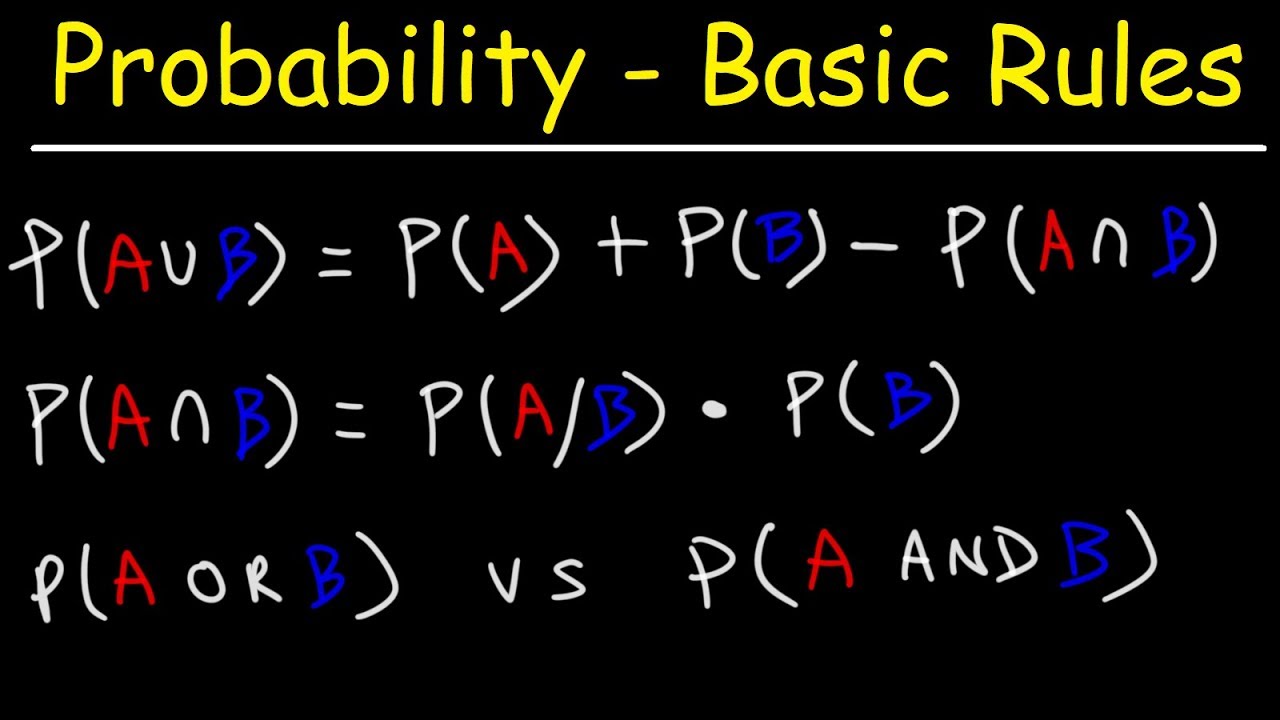
Now that you know the basics, it's time to get a bit more strategic. This video dives into the essential rules that govern how probabilities combine, which is super helpful when you're dealing with more complex scenarios than just a single coin flip. You'll learn how to figure out the probability of either event A OR event B happening. This involves understanding the difference between events that can't happen at the same time (mutually exclusive) and those that can.
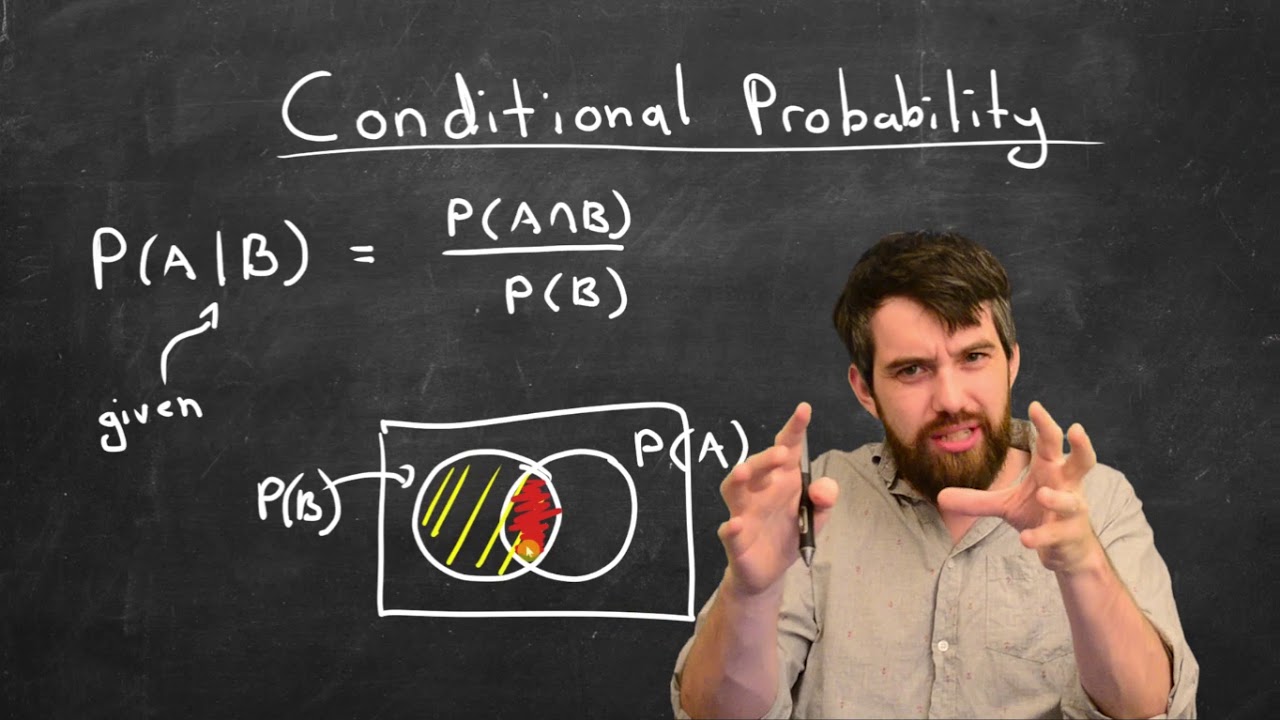
But that's not all. You'll also tackle the Multiplication Rule, which is key for calculating the probability of both event A AND event B occurring. This is especially important when we're talking about independent events – situations where the outcome of one event doesn't affect the outcome of another. The instructor uses clear examples and visual aids, like Venn diagrams, to make these concepts much easier to grasp. Seriously, if you want to go beyond simple probability calculations, this is the video to watch. It's a game-changer for understanding how different chances interact.
- Learn the Addition Rule for 'OR' scenarios and the Multiplication Rule for 'AND' scenarios.
- Differentiate between mutually exclusive and independent events.
Mastering Complementary Events and Complex Scenarios
Sometimes, the easiest way to find the probability of something happening is to figure out the probability of it not happening. Sounds counterintuitive, right? Well, this video introduces the Complement Rule, a really elegant shortcut that can simplify probability calculations immensely. Essentially, if you know the chance of an event not occurring, you can easily find the chance that it will occur by subtracting that from 1. It's a powerful tool for tackling trickier problems efficiently.
Beyond the complement rule, this tutorial also offers insights into approaching probabilities for combined events more strategically. It’s about building a mental toolkit for dissecting a problem and choosing the most effective path to a solution. You'll find yourself visualizing more complex sample spaces and thinking critically about how to break down scenarios. If you've ever felt overwhelmed by probability problems, this video offers a clearer, more streamlined approach, showing you how to work with these concepts effectively, even when they seem a bit daunting at first glance.
- Utilize the Complement Rule for simpler probability calculations.
- Develop strategic approaches for solving combined event probabilities.
Probability in Action: From Dice Rolls to Everyday Decisions
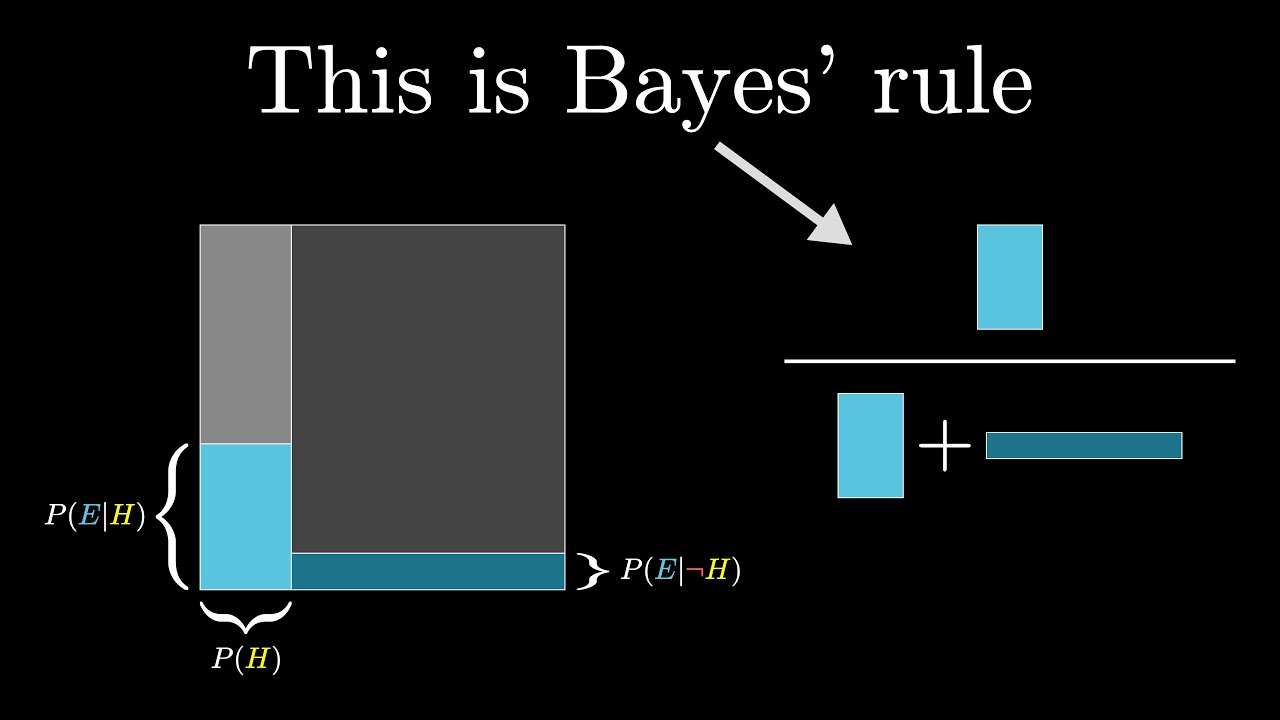
So, we've covered the theory, but how does all this actually play out in the real world? This section bridges the gap, showing you how those abstract probability principles can be applied to analyze everyday situations and, more importantly, make better, more logical decisions. You'll see concrete examples, like how probability helps us understand the odds in games of chance, from rolling dice to drawing cards. It's not just about knowing the numbers; it's about using them.
The creator highlights the practical difference between mutually exclusive and independent events within these real-world contexts. Understanding this distinction is key to making accurate predictions and assessments. By applying probability, you can start to gauge likelihoods more effectively and make more informed judgments. Ultimately, watching this video is about enhancing your logical reasoning skills. It’s about using the power of probability to cut through uncertainty and navigate your world with greater confidence, whether you're making a personal choice or just trying to understand the news. This is basic probability YouTube at its most useful.
- Apply probability concepts to practical, real-world scenarios.
- Enhance logical reasoning and decision-making by assessing likelihood.
Your Next Steps
You've now gained a solid foundation in basic probability theory, from understanding the fundamental definition and sample spaces to mastering the addition and multiplication rules, and even the clever complement rule. These concepts are your tools for analyzing chance and making more informed decisions in your daily life.
Your Action Items
- ☐Pick one video from above and watch it on Querivo
- ☐Ask questions and check summaries while watching without breaking your flow
- ☐Use the AI chat to clarify confusing parts and deepen understanding
- ☐Come back for more curated videos on topics you want to master
Ready to put your newfound probability knowledge to the test? Start by analyzing the likelihood of everyday events around you! For deeper dives into specific probability concepts and to continue practicing with real-world examples, explore the 'Related Videos' section. You might even find yourself applying these principles to understand news statistics or game strategies.
Turn Any YouTube Video into an Interactive Lesson
Paste any video link, get an instant AI summary, and ask questions in real-time.
Try Querivo Free →Related Videos You Might Enjoy
Looking for more perspectives on this topic? Here are some additional videos worth checking out:
Probability Part 1: Rules and Patterns: Crash Course Statistics #13
This video introduces the fundamental concepts of probability, distinguishing between empirical and theoretical probabilities. It explains the addition rule for mutually exclusive and non-mutually exclusive events and introduces the multiplication rule for independent events, using relatable examples.
Probability, Sample Spaces, and the Complement Rule (6.1)
This video explains the fundamentals of probability, defining it as the ratio of favorable outcomes to total possible outcomes. It demonstrates how to calculate simple probabilities using examples like coin flips and introduces the concept of sample spaces to visualize all potential results. The video also covers the complement rule as an alternative method for solving probability problems.