
Feeling overwhelmed by statistical jargon? You're not alone. Understanding probability is the first crucial step to unlocking the power of data science, but finding clear, engaging explanations can be tough. This article will guide you through some of the top YouTube videos that demystify probability, making it accessible for beginners aiming for a solid grasp of statistics in 2025.
Key Takeaways
- 1Master probability basics with curated YouTube videos.
- 2Learn the essential differences and relationship between probability and statistics.
- 3Grasp the practical application of Bayes' Theorem for making smarter decisions.
- 4Understand conditional probability and its nuances for handling complex scenarios.
- 5Explore key probability distributions and their role in modeling the world.
Who this is for
- If you're a high school student just starting with statistics and feeling lost, this guide is for you.
- If you're a college student needing a solid foundation for data science or quantitative analysis.
- If you're an aspiring data scientist looking to solidify core probabilistic concepts before diving deeper.
Start Learning with AI-Powered Video Summaries
Get instant summaries, ask questions, and turn any video into an interactive study session.
Try Querivo Free →Laying the Foundation: Probability vs. Statistics
Ever wondered about the difference between probability and statistics? It's a common sticking point for beginners, and getting this right is essential for building any real understanding of data. Probability deals with predicting what might happen based on known models, while statistics focuses on figuring out what did happen by analyzing observed data. This foundational video breaks down this crucial distinction with remarkable clarity.
The creator utilizes a super simple marble jar analogy to effectively illustrate how probability looks at known scenarios to predict outcomes, while statistics uses observations to build those models in the first place. You'll see how these two fields aren't just related; they're actually intertwined. Statistics helps us create the probability models we need to make sense of the world, and probability provides the framework for understanding uncertainty within those models. It’s a surprisingly effective way to grasp a concept that can often feel abstract and intimidating. For viewers struggling with the basic definitions, this video offers a clear, visual entry point.
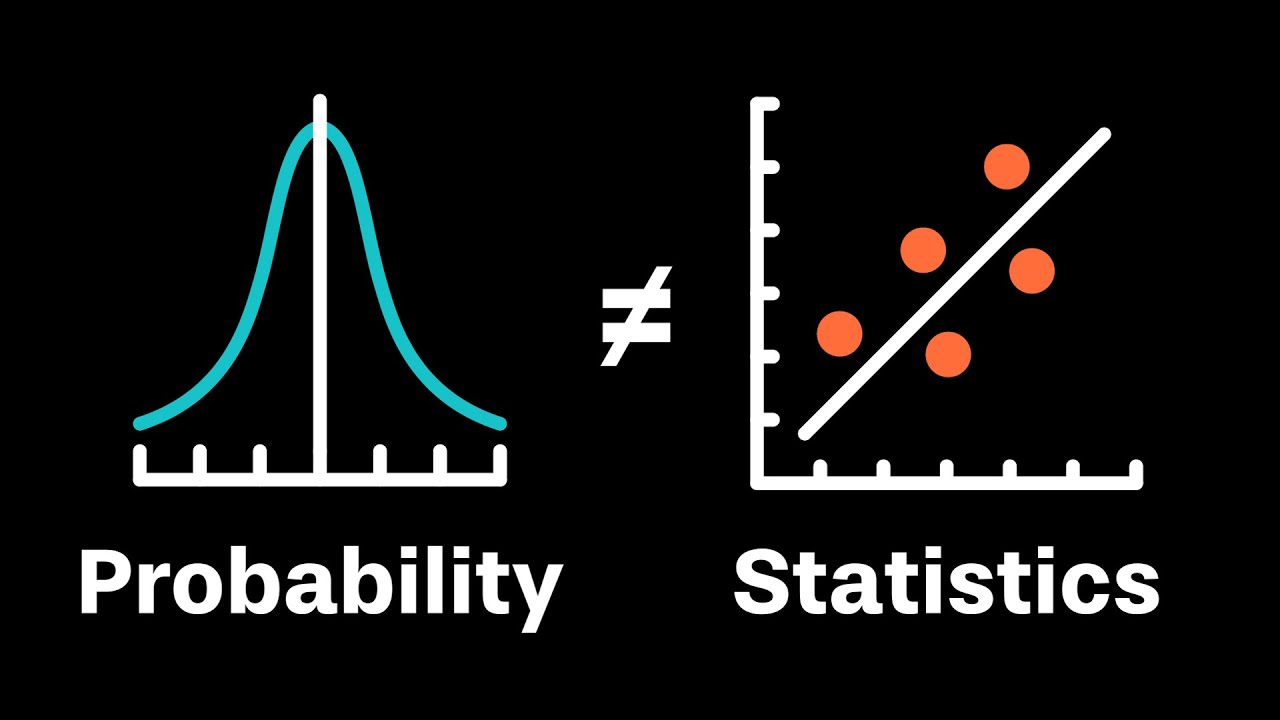
- Grasp the core difference: Probability predicts from models, Statistics infers models from data.
- Recognize their symbiotic relationship in understanding the world.
- Understand the foundational concepts needed for all subsequent statistical learning.
Study This Video Deeper
Get an AI summary and ask questions about confusing parts in real-time.
Open in Querivo →The Power of Updating Beliefs: Understanding Bayes' Theorem
Bayes' Theorem. Sounds intimidating, right? But honestly, it's one of the most powerful tools for making better decisions, especially when faced with new information. This video takes a brilliantly intuitive approach, showing you why it's so important and when to use it before diving into the formal mathematical structure.
You'll explore how new evidence can, and should, change your initial beliefs through relatable scenarios. The creator demystifies concepts like prior probability, likelihood, and posterior probability, making the abstract idea of updating beliefs concrete. Understanding Bayes' Theorem is key to moving beyond gut feelings and making more informed, logical choices in everything from scientific research to everyday life. The visual aids employed are particularly effective in cementing these ideas. This video is an excellent resource for anyone looking to upgrade their decision-making processes with probabilistic reasoning.
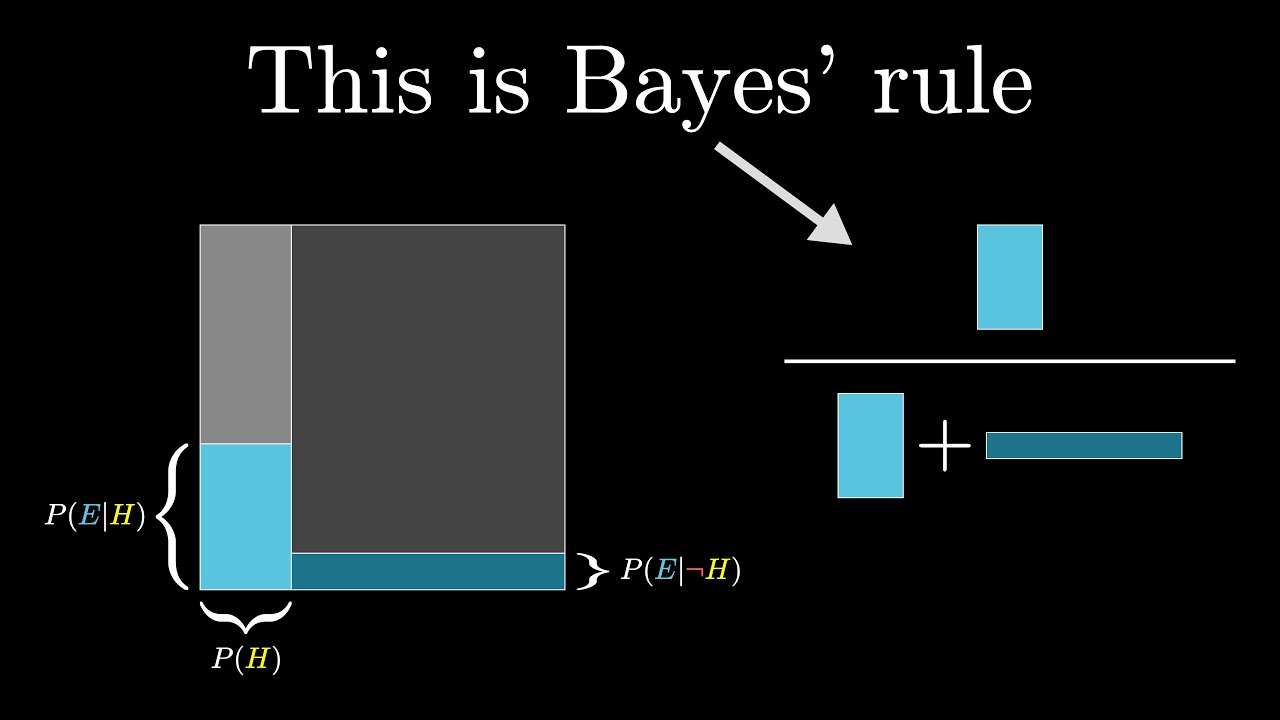
- Learn how new evidence updates your prior beliefs to posterior beliefs.
- Apply Bayes' Theorem to make more rational, evidence-based decisions.
- Understand the intuition behind updating beliefs with new information.
Navigating Uncertainty: Conditional Probability and Its Nuances
Sometimes, the simple "favorable outcomes over total outcomes" formula just doesn't cut it. Why? Because often, events aren't independent, and new information changes the game. This video really highlights that crucial point, introducing conditional probability as the essential tool for handling situations where outcomes are not equally likely and depend on other events.
The creator makes the idea of a "shrunken" sample space super clear – demonstrating how a new piece of information can drastically alter the possibilities you're considering. Plus, you'll get a conceptual handle on the independence test and even a practical look at working backward with Bayes' Theorem. This video provides practical methods for tackling more complex scenarios than basic probability allows. It’s a really solid way to deepen your understanding of probability beyond the absolute basics and prepares you for more advanced statistical modeling.

- Understand why basic probability formulas can be insufficient in real-world scenarios.
- Grasp how new information refines event possibilities with conditional probability.
- Learn practical methods for more complex probability problems.
Modeling the World: Unpacking Probability Distributions
Probability distributions are the backbone of modeling real-world phenomena, from predicting the spread of diseases to understanding customer behavior. This video, part of a series on Monolix, dives into these essential concepts, explaining not just their mathematical structures but also what they actually mean in practice.
The creator provides a focused explanation of the underlying probabilistic framework of Monolix, effectively bridging the gap between algorithm usage and their theoretical basis. This insight is often only found in extensive documentation. You'll see how these distributions help us model individual parameters and observations, and how they describe relationships within entire populations. While the example is drawn from pharmacokinetics, the underlying principles apply broadly across scientific and statistical modeling. It's a fantastic look at how we use probability to represent, understand, and simulate complex systems.
- Demystify common probability distributions and their mathematical structures.
- Understand how distributions model complex real-world scenarios and their parameters.
- Bridge the gap between theoretical probability and practical application in software.
Your Next Steps
You've taken a significant step towards demystifying probability. By understanding the distinction between probability and statistics, mastering Bayes' Theorem for updating beliefs, and grasping conditional probability and distributions for modeling uncertainty, you've built a strong foundation for further statistical exploration. These videos offer clear, concise, and engaging explanations that are perfect for beginners.
Your Action Items
- ☐Pick one video from above and watch it on Querivo to engage with the content interactively.
- ☐Ask questions and check AI-generated summaries while watching without breaking your flow.
- ☐Use the AI chat feature to clarify confusing parts and deepen your understanding of key concepts.
- ☐Come back to this guide for more curated videos on topics you want to master as your statistical journey progresses.
Ready to put your new knowledge to the test? Start exploring real-world datasets and applying these probability concepts to answer your own questions. Continue your learning journey by exploring related videos for a deeper dive into specific applications and related statistical concepts like p-values and normal distributions. With these resources, you're well on your way to confidently navigating the world of data.
Turn Any YouTube Video into an Interactive Lesson
Paste any video link, get an instant AI summary, and ask questions in real-time.
Try Querivo Free →Related Videos You Might Enjoy
Looking for more perspectives on this topic? Here are some additional videos worth checking out:
Module 3: Demystifying Probability
This video demystifies probability by explaining its core formula: favorable outcomes divided by total possible outcomes. It then delves into conditional probability, where events are linked, and Bayes' Theorem, which allows updating beliefs with new evidence, demonstrating their applications in everyday life and AI.
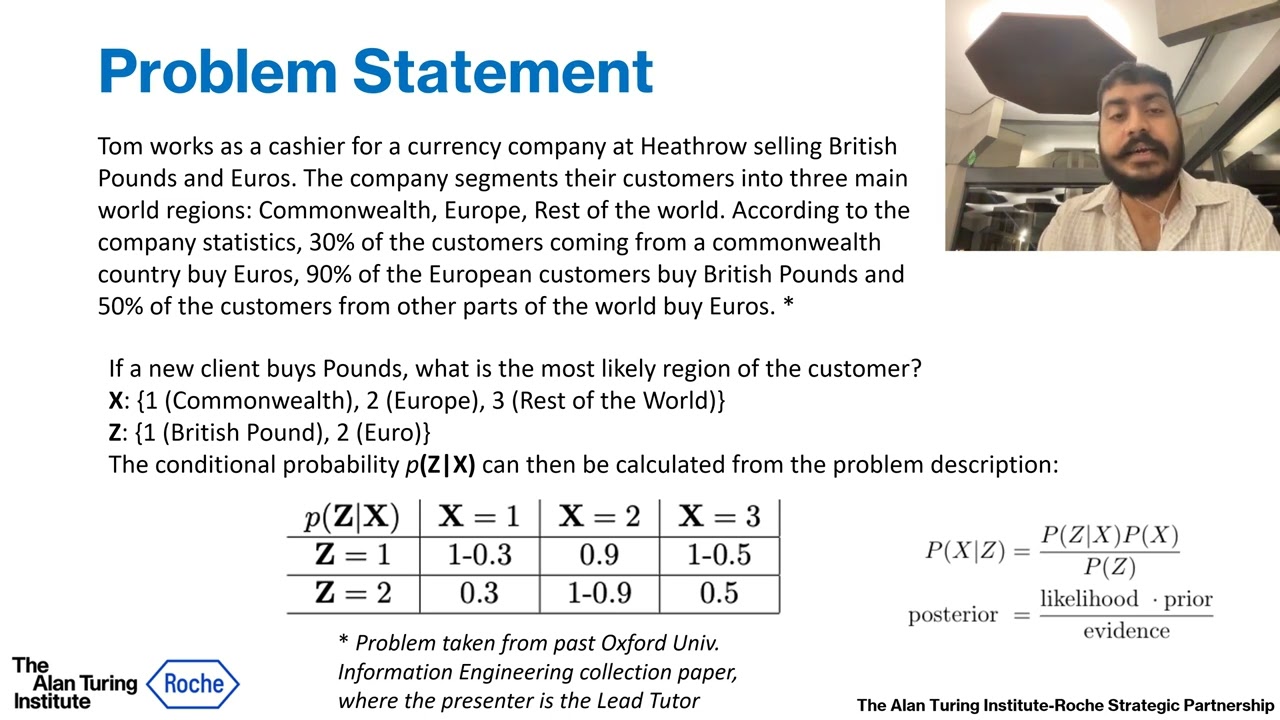
Demystifying Bayesian Estimation with Dr Tapabrata (Rohan) Chakraborty
This video demystifies Bayesian estimation by connecting concepts like Maximum Likelihood Estimation (MLE) and Maximum A Posteriori (MAP) to the well-known rules of conditional probability. Through a numerical example involving currency exchange customers and their regions, the presenter illustrates how incorporating prior information can lead to a more accurate posterior estimate.
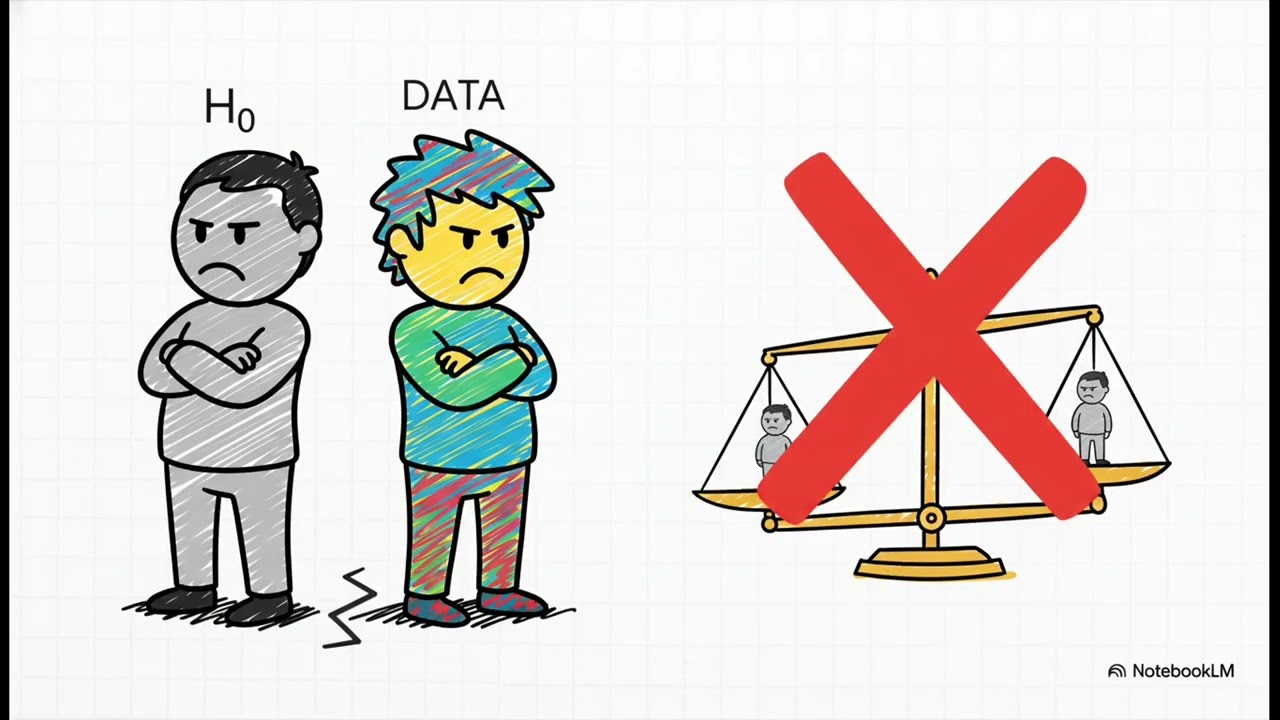
Demystifying the P-Value
This video explains the p-value as a "surprise meter" to assess the likelihood of observed data if the null hypothesis (no effect) is true. It clarifies common misinterpretations, emphasizing that a p-value alone doesn't confirm an effect's reality, magnitude, or importance, and advocates for a comprehensive analysis including effect size and confidence intervals.
Demystifying Bell Curves: Understanding Standard Normal Distributions
This video demystifies the standard normal distribution, explaining density curves, the properties of the normal curve, and how to use Z-scores to standardize and compare data from different distributions. It also introduces the empirical rule for understanding data spread within standard deviations.