
Staring at your organic chemistry textbook and feeling overwhelmed? You're definitely not alone. This complex subject can feel incredibly daunting, but luckily, there's a wealth of excellent online resources available to demystify it for you.
Mastering organic chemistry is a critical step for university students across many science and engineering fields. Understanding its foundational principles—like bonding, nomenclature, and basic reactions—sets the stage for success in advanced courses and, ultimately, your future career. We've scoured YouTube to bring you the most impactful videos that explain core concepts clearly and effectively, turning this challenging subject into an accessible journey.
Key Takeaways
- 1Your essential guide to organic chemistry basics on YouTube.
- 2Learn to define organic chemistry and its unique properties.
- 3Master naming organic compounds with IUPAC rules.
- 4Visualize molecules and their structures with confidence.
- 5Understand key organic molecule types for foundational knowledge.
Who this is for
- If you're a university student starting organic chemistry and feeling lost.
- If you're looking for clear, concise explanations of complex concepts.
- If you prefer visual learning and step-by-step tutorials to grasp fundamentals.
Start Learning with AI-Powered Video Summaries
Get instant summaries, ask questions, and turn any video into an interactive study session.
Try Querivo Free →Unlock the Secrets: What Exactly Is Organic Chemistry?
Feeling like organic chemistry is some arcane art? This video is your Rosetta Stone. It dives right into the fundamental definition of organic chemistry, tracing its historical roots and explaining why carbon is the absolute star of the show. You'll grasp the unique property of catenation—carbon's ability to link with itself to form long chains—and understand how chemists classify compounds. Plus, you'll get a solid introduction to functional groups, those key atomic arrangements that give molecules their specific properties. It’s a fantastic starting point for anyone new to the subject, covering everything from compound classification to basic reaction types. This video distills complex organic chemistry concepts into an easily digestible 8-minute format, making it an excellent resource for quick learning or review.
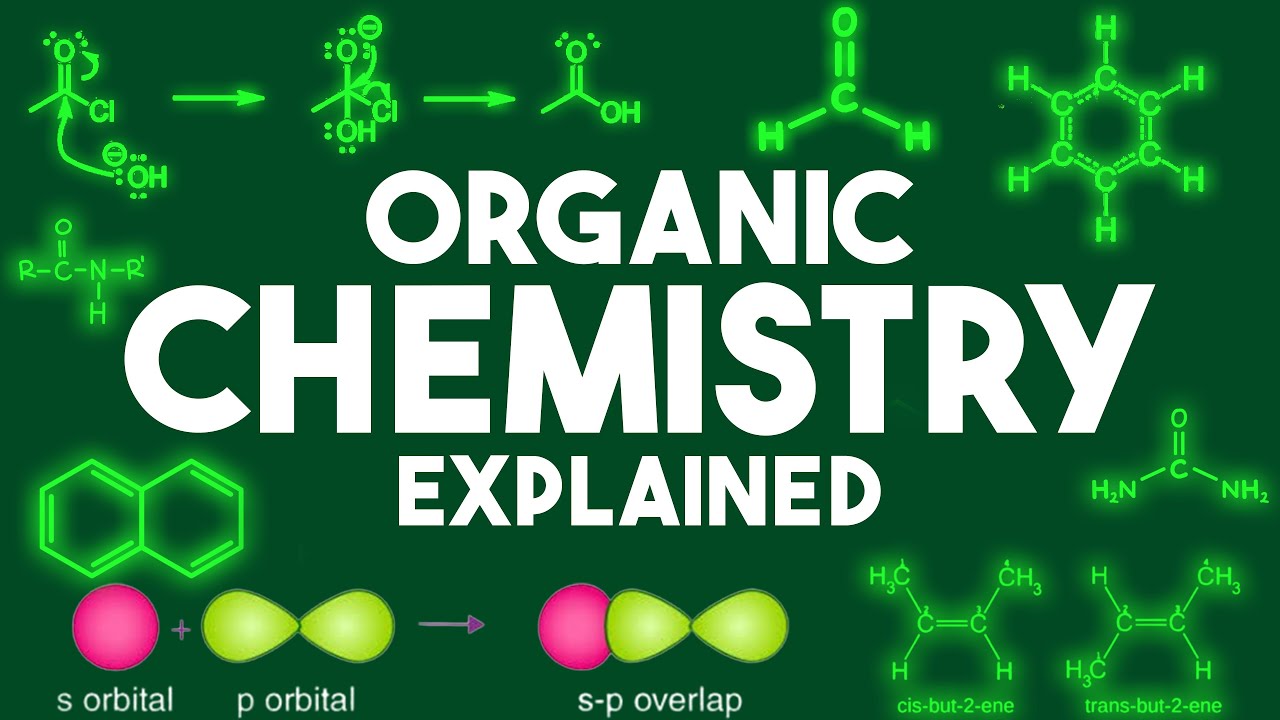
- Organic chemistry is the study of carbon compounds, characterized by catenation.
- Understand functional groups and how they define molecule properties.
Study This Video Deeper
Get an AI summary and ask questions about confusing parts in real-time.
Open in Querivo →Speak the Lingo: Mastering Organic Nomenclature Like a Pro
Ever look at a chemical name and feel like it's in a foreign language? You'll be happy to know there's a system! This video breaks down the world of organic nomenclature, focusing on the International Union of Pure and Applied Chemistry (IUPAC) rules. It’s presented in a super clear, step-by-step manner. You'll learn how to identify the parent carbon chain, determine the correct suffix based on functional groups, and apply prefixes for substituents. Honestly, mastering nomenclature is like getting the key to unlock understanding complex structures and reactions. It’s definitely worth watching to move beyond just recognizing names to understanding what they actually mean. The creator provides a clear, foundational understanding of IUPAC nomenclature, starting with the basics and building up complexity in an accessible way, contrasting it with common names and highlighting the necessity of standardization.
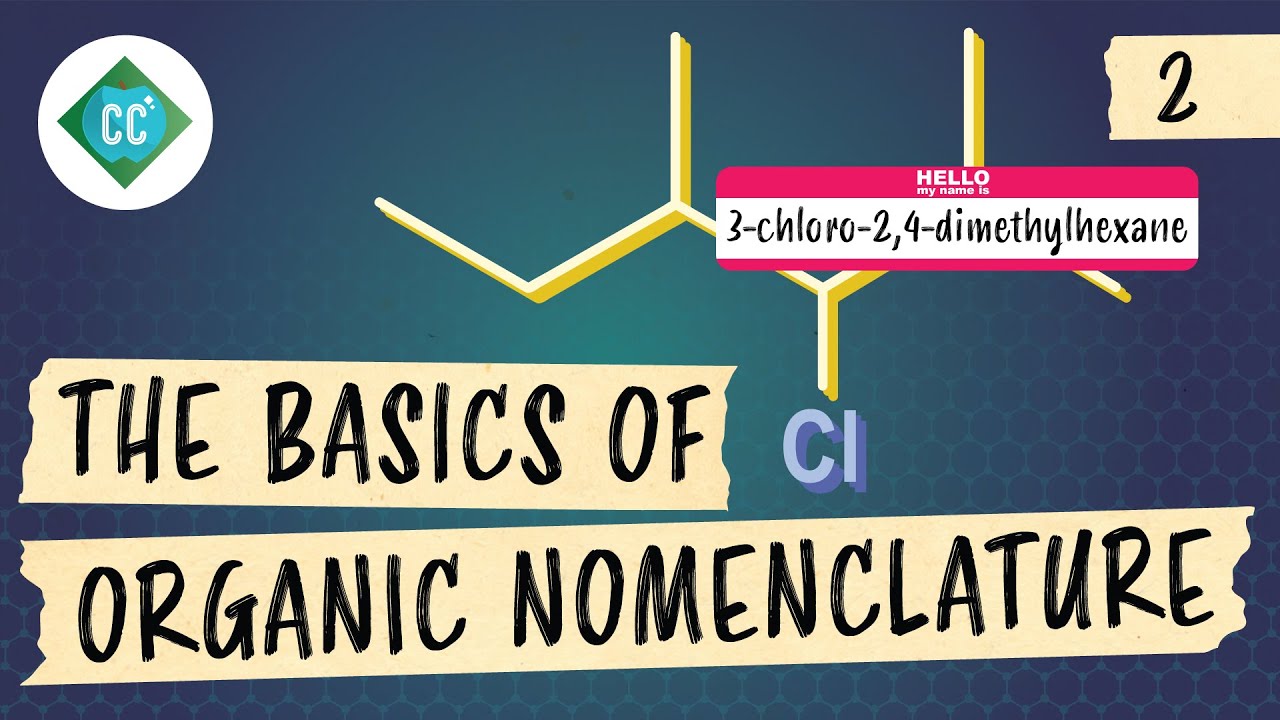
- IUPAC nomenclature provides a standardized system for naming organic compounds.
- Learn to identify parent chains, suffixes, and numbered prefixes for accurate naming.
Seeing is Believing: Visualizing Carbon Bonding and Molecule Representations
Carbon's central role in organic chemistry can't be overstated, and understanding how we represent its molecules is crucial. This video is a game-changer for visualizing organic structures. It doesn't just talk about molecular formulas; it walks you through structural formulas, condensed structural formulas, and the super-efficient skeletal (line-angle) formulas. Seriously, once you get the hang of skeletal formulas, your understanding of molecular arrangements will skyrocket. Plus, it introduces you to the basics of hydrocarbons like alkanes, alkenes, and alkynes, giving you a foundational grasp of these fundamental building blocks. It's surprisingly short, but packed with the visual cues you need. The creator breaks down complex representations into easily digestible steps and visually demonstrates how to convert between them, which is crucial for beginners. It also clearly defines and categorizes hydrocarbons and introduces substituents early on.
- Carbon's tetravalency is key; understanding its bonding is foundational.
- Master molecular representations from skeletal formulas to structural ones.
Mapping the Molecular Landscape: Key Organic Molecule Types Explained
Once you've got the basics of carbon and how to draw molecules, the next logical step is understanding the types of molecules you'll encounter. This video tackles exactly that. It provides a clear overview of nine fundamental classes of organic molecules that are pretty much everywhere in organic chemistry. You’ll see how structural differences, especially in homologous series like alkanes, alkenes, and alkynes, lead to different properties. The instructor also highlights how to identify functional groups based on their specific atom arrangements. It’s a great way to start building a mental library of common organic structures. This video provides a clear, concise, and structured overview of the nine essential organic molecule types, making a complex topic seem more approachable.
- Nine major types of organic molecules are introduced, covering key functional groups.
- Recognize structural differences and identify functional groups by atom arrangement.
Your Next Steps
By leveraging these top YouTube resources, university students can build a seriously strong foundation in organic chemistry. From understanding the core concepts and nomenclature to visualizing molecular structures and identifying key molecule types, these videos provide a clear and engaging path to mastering the subject.
To get the most out of these valuable visual aids, we recommend an active learning approach. When watching, try to pause the videos and sketch out the structures or nomenclature examples yourself. Don't just passively consume the information. Use the provided recaps as a checklist to ensure you've grasped the key takeaways. For those who benefit from immediate clarification, consider using tools that can provide real-time summaries and allow you to ask questions about specific points you find confusing. This interactive approach can significantly deepen your understanding and retention.
Your Action Items
- ☐Pick one video from above and watch it on Querivo
- ☐Ask questions and check summaries while watching without breaking your flow
- ☐Use the AI chat to clarify confusing parts and deepen understanding
- ☐Come back for more curated videos on topics you want to master
Ready to conquer organic chemistry? Start exploring these videos today and build your confidence!
Turn Any YouTube Video into an Interactive Lesson
Paste any video link, get an instant AI summary, and ask questions in real-time.
Try Querivo Free →Related Videos You Might Enjoy
Looking for more perspectives on this topic? Here are some additional videos worth checking out:
GENERAL CHEMISTRY explained in 19 Minutes
This video provides a high-level overview of fundamental chemistry concepts, starting with the atomic structure and the role of electrons. It explains how elements are organized in the periodic table, the nature of chemical bonds (covalent, ionic, metallic), and the behavior of molecules based on their electron configuration and electronegativity.
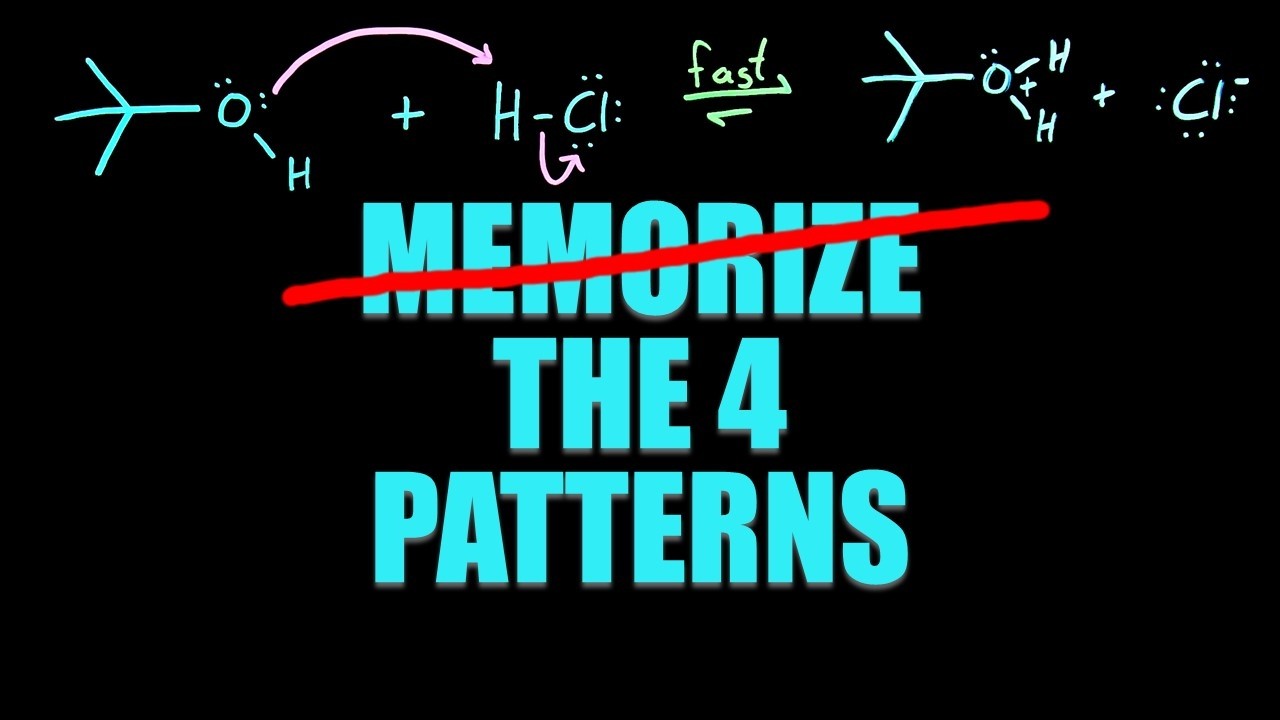
The Trick for Learning Reaction Mechanisms | 4 Patterns | Organic Chemistry
This video breaks down organic chemistry reaction mechanisms into four fundamental patterns: proton transfer, dissociation, nucleophilic attack, and rearrangement. By understanding these core patterns, students can simplify the process of memorizing and predicting new reaction mechanisms.
How to study CHEMISTRY so FAST that it feels ILLEGAL
This video presents neuroscience-backed strategies for studying chemistry efficiently, transforming it from a difficult subject into a manageable logic puzzle. It emphasizes pattern recognition over rote memorization and offers actionable techniques like focused study loops, reverse pyramid study, habit stacking, and memory palace methods.
Basic Chemistry Concepts Part I 🐧
This video introduces fundamental chemistry concepts, starting with matter and elements organized by the periodic table. It explains atoms as the smallest unit of an element, detailing their structure with a focus on electrons, and introduces atomic numbers, mass numbers, and isotopes using carbon as an example. The instructor also touches upon the significance of electron configurations for atomic stability.
Organic Chemistry: Some Basic Principles and Techniques | Class 11Chemistry | Full Chapter in 15 Min
This video provides a rapid revision of the fundamental principles and techniques of organic chemistry for Class 11 students. It covers key concepts like carbon's tetravalency, hydrocarbon structures, classification of organic compounds, IUPAC nomenclature, and isomerism.
What is Organic Chemistry? Why is Organic Chemistry So Important? in Telugu
This video explains that organic chemistry is the study of carbon-containing compounds and highlights its critical importance in understanding life and developing essential products like medicines, vaccines, and everyday items. It traces the evolution of the field from the belief that organic compounds could only come from living things to the modern understanding that they can be synthesized artificially.
Be the GOD of JEE Organic Chemistry : DO THIS!
This video provides a strategic approach to mastering JEE Organic Chemistry, emphasizing a change in perspective from rote memorization to understanding core concepts like General Organic Chemistry and reaction mechanisms. It stresses the importance of sequential learning and actively solving problems to build confidence and achieve success.