
Tired of sifting through endless search results that barely scratch the surface? Imagine an AI that not only understands your most complex queries but also backs its answers with solid sources, guiding you to truly profound insights. That's the promise of Perplexity AI, and mastering its capabilities can genuinely transform how you research.
Key Takeaways
- 1Master advanced AI search for deeper insights.
- 2Learn complex meta-analysis techniques.
- 3Achieve peak focus for intensive research.
- 4Understand AI reasoning for better results.
- 5Ask questions that unlock AI's full potential.
Who this is for
- If you're a student drowning in research papers and need to synthesize information efficiently
- If you're a professional or journalist needing quick, source-backed answers for critical projects
- If you're curious about AI-powered research tools and want to go beyond basic Google searches
Start Learning with AI-Powered Video Summaries
Get instant summaries, ask questions, and turn any video into an interactive study session.
Try Querivo Free →Dive Deep into Data: Unlocking Complex Meta-Analysis with SEM
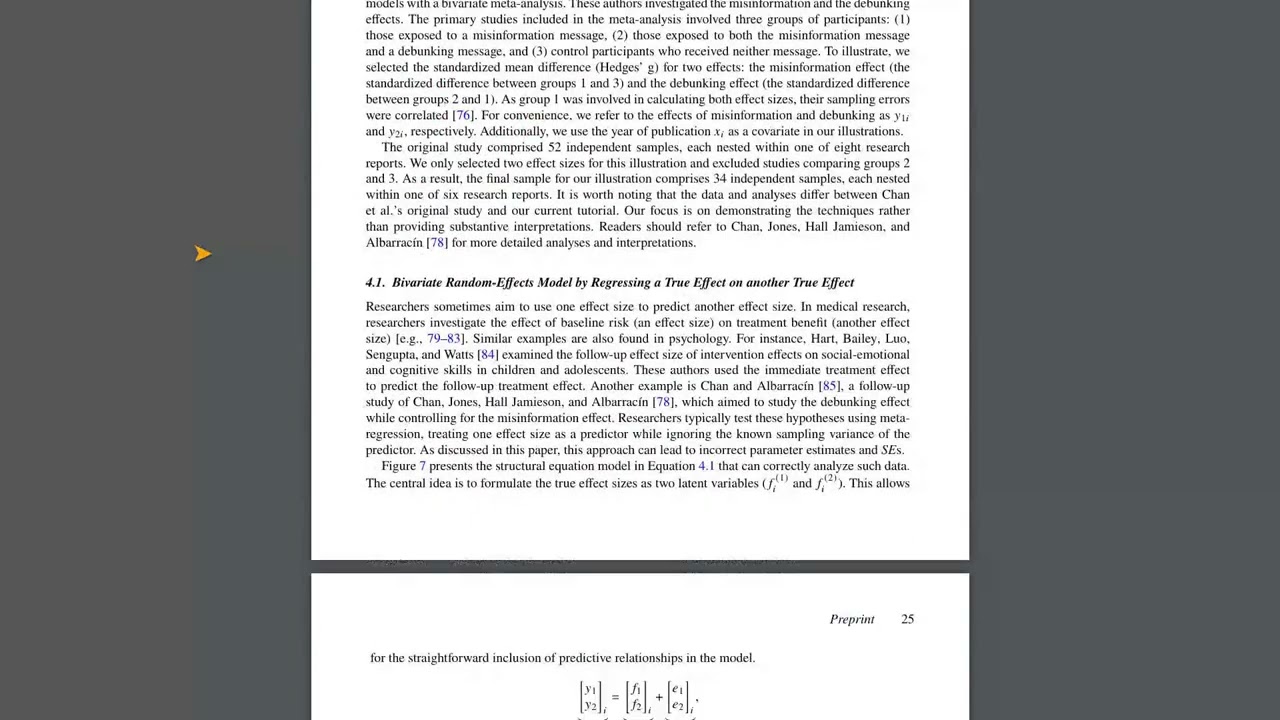
When you're tackling a research question that requires synthesizing information from multiple studies, the sheer volume and complexity can be daunting. Perplexity AI excels at pulling together disparate sources, but understanding how to approach deep analysis, much like advanced statistical methods, is key. This video dives into Structural Equation Modeling (SEM) for meta-analysis, which, while technical, mirrors the intricate way Perplexity AI can connect dots across vast datasets. You'll see how complex relationships can be modeled, helping you appreciate the depth an AI can reach when guided effectively.
It’s not about doing the exact same statistical analysis, but about understanding the principles of complex data synthesis. Learning how SEM visually represents intricate relationships between variables can give you a mental model for how Perplexity AI might be piecing together information from countless sources to answer your nuanced queries. We found this video particularly insightful for grasping how to handle multiple, interconnected pieces of information—a skill directly transferable to crafting more sophisticated prompts for AI search engines.
- SEM offers a visual, flexible way to combine study findings.
- Learn to think about complex data relationships, like Perplexity AI does.
Study This Video Deeper
Get an AI summary and ask questions about confusing parts in real-time.
Open in Querivo →Achieve Peak Focus: Mastering Flow State for Intense AI Research Sessions
Let's be honest, diving deep into research, whether with AI or traditional methods, requires serious concentration. Distractions are everywhere. This video introduces the concept of 'flow state'—that magical zone where you're completely absorbed, time seems to warp, and productivity soars. Understanding how to enter and maintain this state is crucial for any serious research endeavor, especially when you're leveraging a powerful tool like Perplexity AI. You'll discover practical ways to minimize blockers and maximize your focus.
Applying these principles means you can spend longer, more productive periods interacting with Perplexity AI, refining your questions, and critically evaluating the sources it provides. It's about optimizing your performance alongside the AI's. We really liked how this creator breaks down the psychology behind deep work, offering a framework that’s not just theory but actionable for anyone struggling to stay on task. This is key to making those advanced Perplexity AI searches truly effective.

- 'Flow state' is your peak performance mode for focused work.
- Identify and overcome distractions to maximize your research time.
Beyond the Black Box: Making AI Reasoning Transparent with Scratchpad
When you get an answer from Perplexity AI, it's easy to just accept it. But how does it arrive at that conclusion? This video tackles the "black box" problem in AI by introducing the Scratchpad framework. It's designed to make AI's reasoning process more transparent and collaborative. For anyone using AI for research, understanding how an AI thinks is paramount to trusting its output and even guiding it more effectively. This is surprisingly important for advanced Perplexity AI use.
By exploring frameworks like Scratchpad, you gain confidence in the AI's process. It helps you see the intermediate steps, making it easier to spot potential errors or biases. This enhanced transparency is a game-changer for research, allowing you to engage in a more dynamic, critical dialogue with the AI. It’s a fantastic primer for anyone wanting to truly understand and leverage the intelligence behind tools like Perplexity AI, moving beyond simple queries to a more collaborative problem-solving approach.

- Understand how AI arrives at its answers for better trust.
- Explore frameworks that make AI reasoning more transparent.
The Art of the Question: Guiding Perplexity AI to Deeper, Source-Backed Answers
Ultimately, the power of Perplexity AI lies in your ability to ask the right questions. This video champions the fundamental role of questioning in driving deeper understanding and meaningful dialogue. It’s a direct call to action for refining your approach when interacting with any AI, and especially relevant for maximizing your Perplexity AI tutorial YouTube experience. You'll learn how to move beyond superficial inquiries to foster a genuine exchange that yields richer insights.
This isn't just about asking what you want to know, but how you ask it. The creator emphasizes active listening—in an AI context, this means iterative refinement and building upon initial responses. Developing this skill will help you formulate queries that elicit comprehensive, source-backed answers, making your research significantly more robust and reliable. It’s a practical guide to unlocking the full potential of AI-driven search.

- The quality of your questions dictates the depth of AI answers.
- Practice asking iterative, refined questions for better insights.
Your Next Steps
By integrating insights from advanced statistical modeling principles, peak performance psychology, AI transparency frameworks, and the art of effective questioning, you can truly transform your Perplexity AI searches. What was once a simple query can become a sophisticated research expedition, yielding deeper understanding and more reliable information.
Your Action Items
- ☐Pick one video from above and watch it on Querivo
- ☐Ask questions and check summaries while watching without breaking your flow
- ☐Use the AI chat to clarify confusing parts and deepen understanding
- ☐Come back for more curated videos on topics you want to master
Ready to elevate your research game? Start mastering Perplexity AI today and unlock a new level of efficiency and depth in your work.
Turn Any YouTube Video into an Interactive Lesson
Paste any video link, get an instant AI summary, and ask questions in real-time.
Try Querivo Free →Related Videos You Might Enjoy
Looking for more perspectives on this topic? Here are some additional videos worth checking out:
Neuroscientist: How To Boost Your Focus PERMANENTLY in Minutes

How to enter ‘flow state’ on command | Steven Kotler for Big Think
This video explains the concept of 'flow state,' also known as being 'in the zone,' characterized by effortless effort, total absorption, and distorted time perception. It outlines key triggers and intrinsic motivators that can help individuals enter and maintain this optimal performance state.

Unlock Deeper Thinking with Scratchpad
This video introduces the Scratchpad framework as a solution to the AI 'black box' problem, offering a transparent and interactive way for AIs to reason. Unlike rigid 'chain of thought' methods, Scratchpad fosters AI collaboration and enhances user intelligence.

Can Google's Mind Evolution Approach Unlock Deeper Thinking in Large Language Models?
This video explains Google DeepMind's "Mind Evolution" approach, which uses genetic algorithms to enhance Large Language Models' (LLMs) problem-solving abilities without requiring formal problem definitions. It demonstrates how this method significantly improves LLM performance on complex natural language planning tasks compared to traditional methods like "best of n".