
Ever felt lost in the maze of machine learning jargon? From regression to clustering, the world of ML algorithms can seem daunting, and it's easy to get bogged down in the technical details without a clear grasp of the underlying principles.
Key Takeaways
- 1This guide highlights exceptional YouTube videos that demystify fundamental ML algorithms.
- 2Learn to view any ML algorithm through the lens of optimization.
- 3Master the core differences between supervised and unsupervised learning.
- 4Understand the hierarchy of AI, ML, and Deep Learning.
- 5Get a clear introduction to the building blocks of neural networks.
Who this is for
- If you're struggling to connect the dots between different ML algorithms,
- If you're a student or developer needing a solid conceptual foundation in AI,
- If you're new to machine learning and want to understand its core workings without getting lost in code,
Start Learning with AI-Powered Video Summaries
Get instant summaries, ask questions, and turn any video into an interactive study session.
Try Querivo Free →Unlock Any Algorithm by Understanding the Core: Optimization
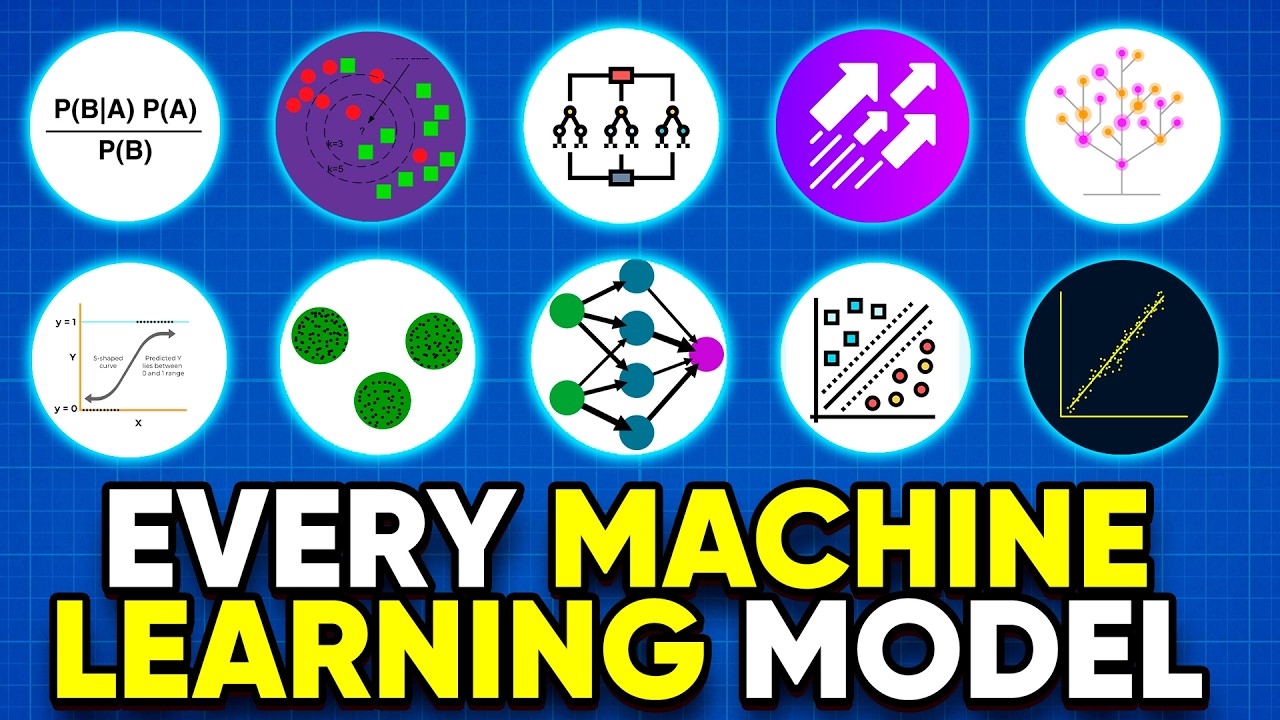
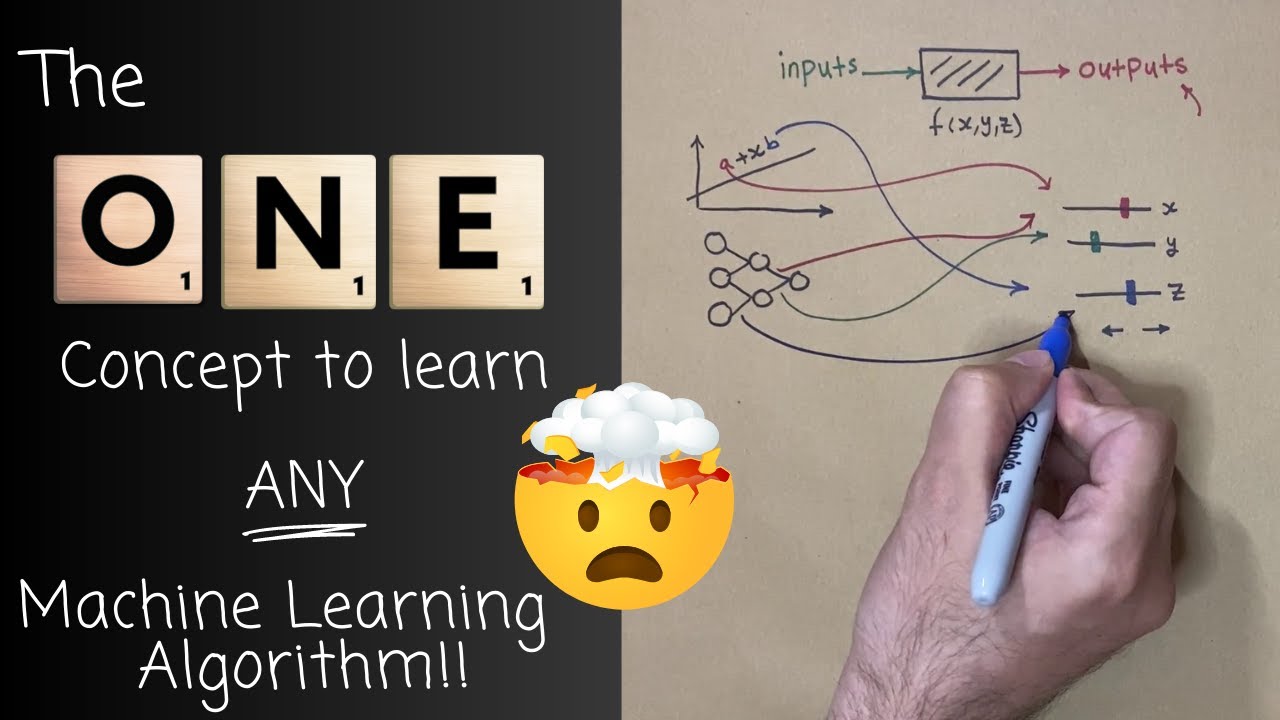
It sounds complex, right? But what if we told you that at its heart, almost every machine learning algorithm is really just about optimization? This fundamental concept is your golden ticket to understanding new models quickly. Instead of memorizing every unique feature of each algorithm, you can see them as different approaches to solving an optimization problem. Think of it like this: you have a set of tunable parameters, and your goal is to adjust them until you minimize errors or maximize performance, based on a specific metric.
This video breaks down that powerful idea. By framing machine learning models as functions with parameters that need tuning, it gives you a consistent lens through which to view everything from simple linear regression to more complex deep learning architectures. It's a surprisingly simple yet incredibly effective way to demystify the field.
- Machine learning algorithms are fundamentally optimization problems.
- Understanding tunable parameters and error metrics is key to grasping any model.
Mastering the Divide: Supervised vs. Unsupervised Learning
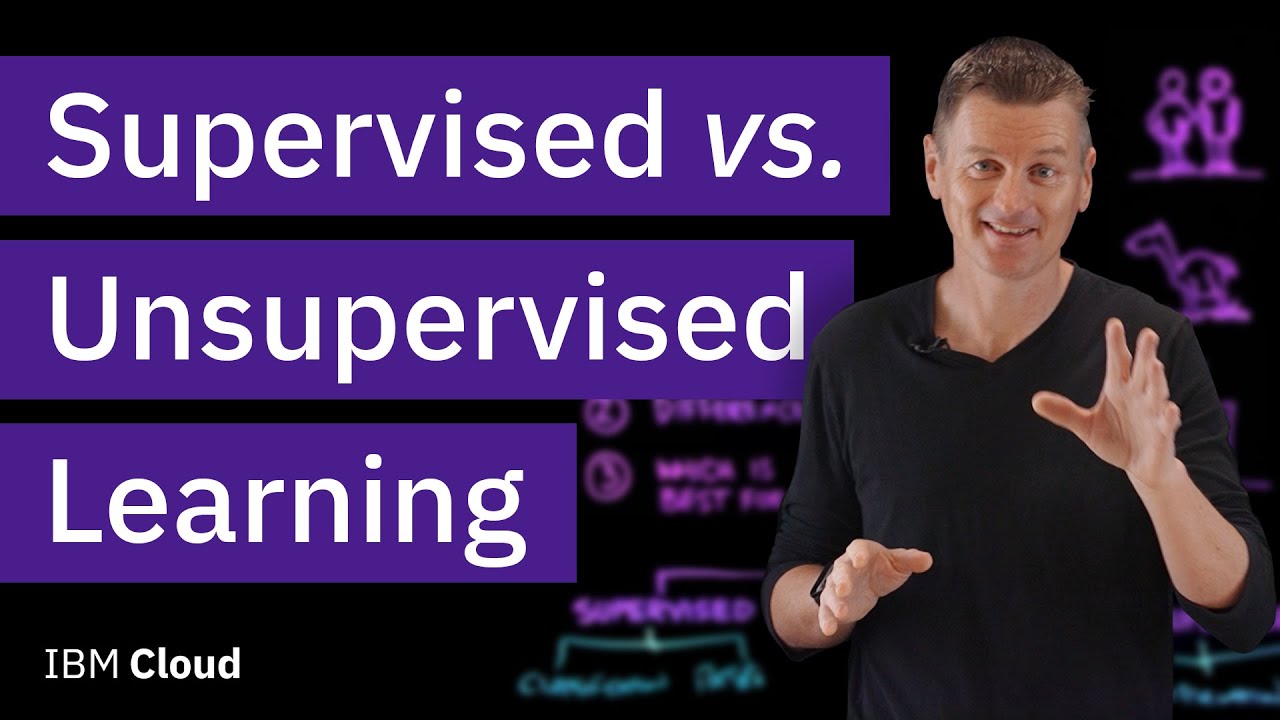
Now that we've got the optimization mindset, let's tackle one of the most fundamental distinctions in machine learning: supervised versus unsupervised learning. You'll run into this classification everywhere, and understanding it is absolutely crucial. Supervised learning is like learning with a teacher – you've got labeled data, meaning each piece of data comes with the "correct" answer. This is what we use for tasks like classification (sorting things into categories) and regression (predicting a continuous value).
Unsupervised learning, on the other hand, is more like exploring on your own. You're given unlabeled data and tasked with finding patterns, structures, or relationships within it. Clustering (grouping similar data points) and dimensionality reduction (simplifying data while retaining key information) are prime examples here. This video also touches on semi-supervised learning, a hybrid approach that uses a bit of both, offering a really comprehensive overview of these foundational paradigms.
- Supervised learning uses labeled data for classification and regression.
- Unsupervised learning finds patterns in unlabeled data, like clustering.
Study This Video Deeper
Get an AI summary and ask questions about confusing parts in real-time.
Open in Querivo →Demystifying AI's Hierarchy: Machine Learning vs. Deep Learning
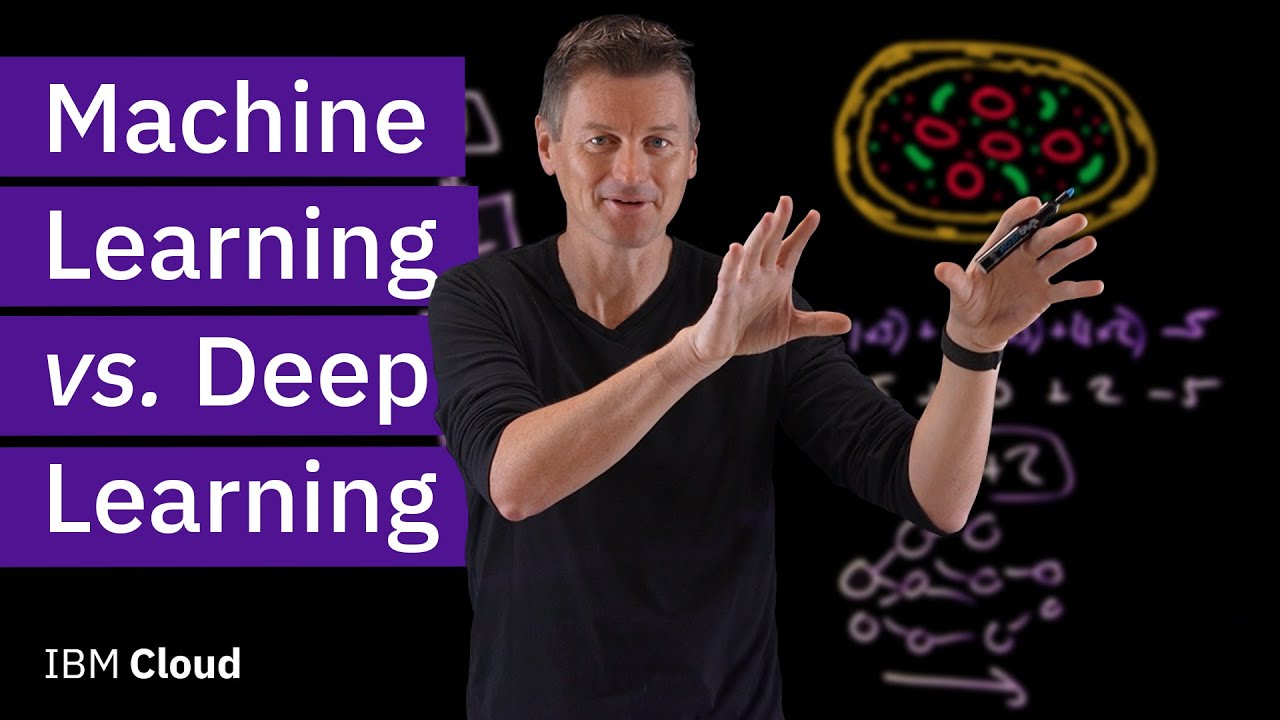
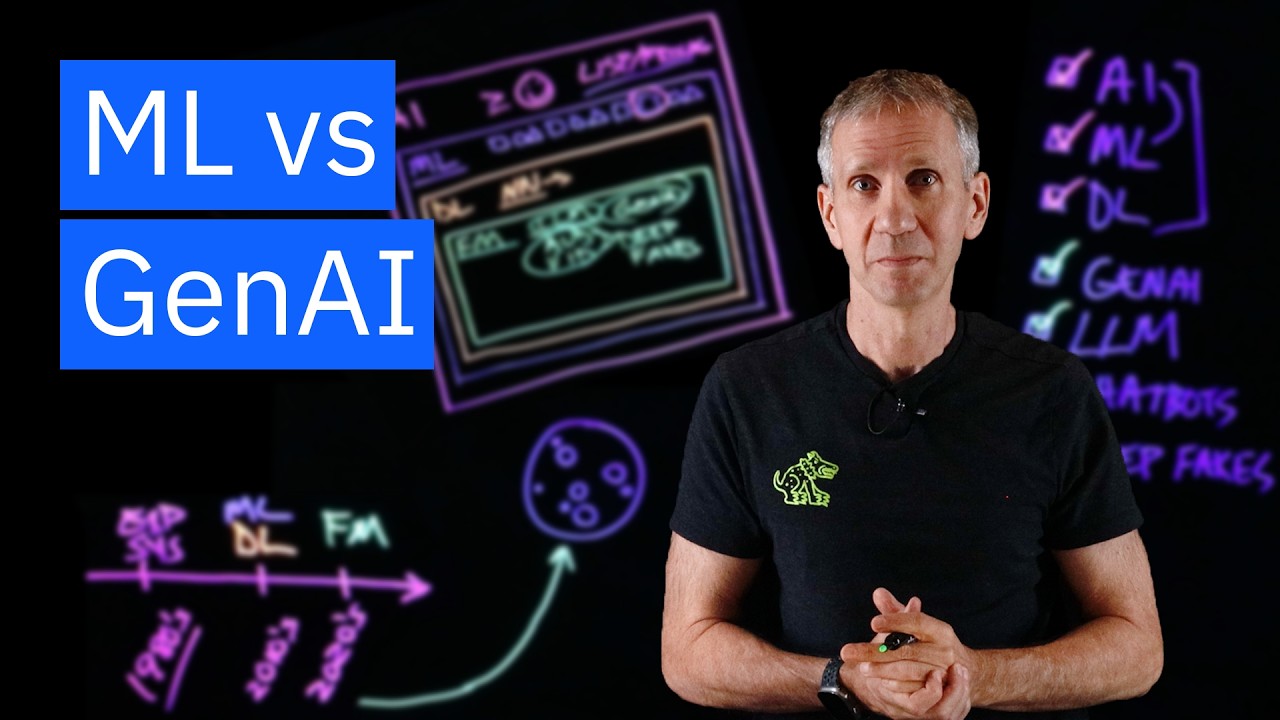
It's pretty common to hear "AI," "Machine Learning," and "Deep Learning" thrown around interchangeably, but they aren't quite the same thing, are they? This video does an excellent job of clarifying their relationship. Think of Artificial Intelligence (AI) as the broadest concept – the idea of creating intelligent machines. Machine Learning (ML) is a subset of AI, where systems learn from data without being explicitly programmed for every single task. And then, Deep Learning (DL) is a subset of ML that uses complex, multi-layered neural networks.
The video uses a fantastic pizza-ordering analogy to illustrate how ML typically works with structured data, while DL really shines with unstructured data, like images or text. A key differentiator is DL's ability to perform automatic feature learning. Instead of you manually telling the model what features to look for (like "crust type" or "topping amount" for pizza), deep learning networks can often discover these relevant features themselves. It's a subtle but significant difference that powers many of today's most advanced AI applications.
- AI is the broad field, ML is a subset, and DL is a subset of ML.
- Deep learning excels with unstructured data and can automatically learn features.
Building Blocks of Intelligence: The Essence of Neural Networks
You can't really talk about machine learning, especially deep learning, without talking about neural networks. They're the workhorses behind so much of modern AI. But what exactly are they? This video provides a clear, visual introduction to the basic structure. Imagine a network of interconnected "neurons," organized into layers. There's an input layer where data comes in, one or more hidden layers where the "thinking" happens, and an output layer that gives you the result.
When you feed data into a neural network, each neuron processes it and passes it along to the next layer. As the data moves through, the network starts to detect patterns and features – these are the "tunable parameters" we talked about earlier. The video uses the example of handwritten digit recognition to show how these networks learn to identify specific characteristics, like curves and lines, to ultimately figure out if it's a "2" or a "7." It's a really intuitive way to grasp how these powerful learning systems operate.
- Neural networks consist of neurons organized into input, hidden, and output layers.
- They learn by processing input data through these layers to detect patterns.
Your Next Steps
By understanding machine learning algorithms through the lens of optimization, grasping the supervised vs. unsupervised distinction, recognizing the hierarchy of AI, ML, and DL, and demystifying neural networks, you've built a robust conceptual framework. These videos offer more than just information; they provide a foundational understanding that will empower you to tackle more complex topics with confidence.
Your Action Items
- ☐Pick one video from above and watch it on Querivo
- ☐Ask questions and check summaries while watching without breaking your flow
- ☐Use the AI chat to clarify confusing parts and deepen understanding
- ☐Come back for more curated videos on topics you want to master
Ready to dive deeper? Start exploring these algorithms in your own projects and continue your learning journey with these valuable video resources. The world of machine learning is vast, but with clear explanations like these, it becomes much more accessible.
Turn Any YouTube Video into an Interactive Lesson
Paste any video link, get an instant AI summary, and ask questions in real-time.
Try Querivo Free →Related Videos You Might Enjoy
Looking for more perspectives on this topic? Here are some additional videos worth checking out:
AI, Machine Learning, Deep Learning and Generative AI Explained
Machine Learning vs Deep Learning
This video explains the relationship between AI, Machine Learning (ML), and Deep Learning (DL), highlighting that DL is a subset of ML which, in turn, is a subfield of AI. It illustrates ML using a pizza ordering example with structured data and then contrasts it with DL's ability to handle unstructured data and learn features automatically.