Dreaming of wielding the power of data to uncover insights, build predictive models, or automate complex processes? Python is your gateway, and this guide is your map.
Key Takeaways
- 1Unlock your data science potential with top YouTube videos.
- 2Master Python fundamentals and essential data analysis libraries.
- 3Discover effective strategies for active coding and project building.
- 4Build a strong portfolio to showcase your new skills.
- 5Learn Python for data science efficiently and effectively.
Who this is for
- If you're struggling to find a clear learning path for data science with Python
- If you're tired of endless tutorials and want to start coding effectively
- If you're a beginner aiming for an entry-level data science role
Start Learning with AI-Powered Video Summaries
Get instant summaries, ask questions, and turn any video into an interactive study session.
Try Querivo Free →Build a Solid Python Foundation for Data Analysis
Embarking on your data science journey means starting with a robust understanding of Python. This video zeroes in on establishing that crucial base, making sure you're not just learning syntax, but how to apply it effectively for data tasks. It's about building from the ground up, ensuring that those foundational concepts really stick.
You'll discover how to prioritize the core Python elements that matter most for analysis: data types, loops, and functions. But it doesn't stop there. The creator walks you through mastering NumPy for those essential numerical computations and then dives deep into Pandas, the workhorse for any serious data manipulation. Plus, you'll learn how to bring your findings to life with Matplotlib and Seaborn. It's a pretty solid plan for getting hands-on with data right away.
This is a great starting point if you've felt overwhelmed by Python before or if you just want a structured, no-nonsense approach specifically geared towards data analysis. The teaching style is personal and practical, sharing real lessons learned to help you avoid common pitfalls.
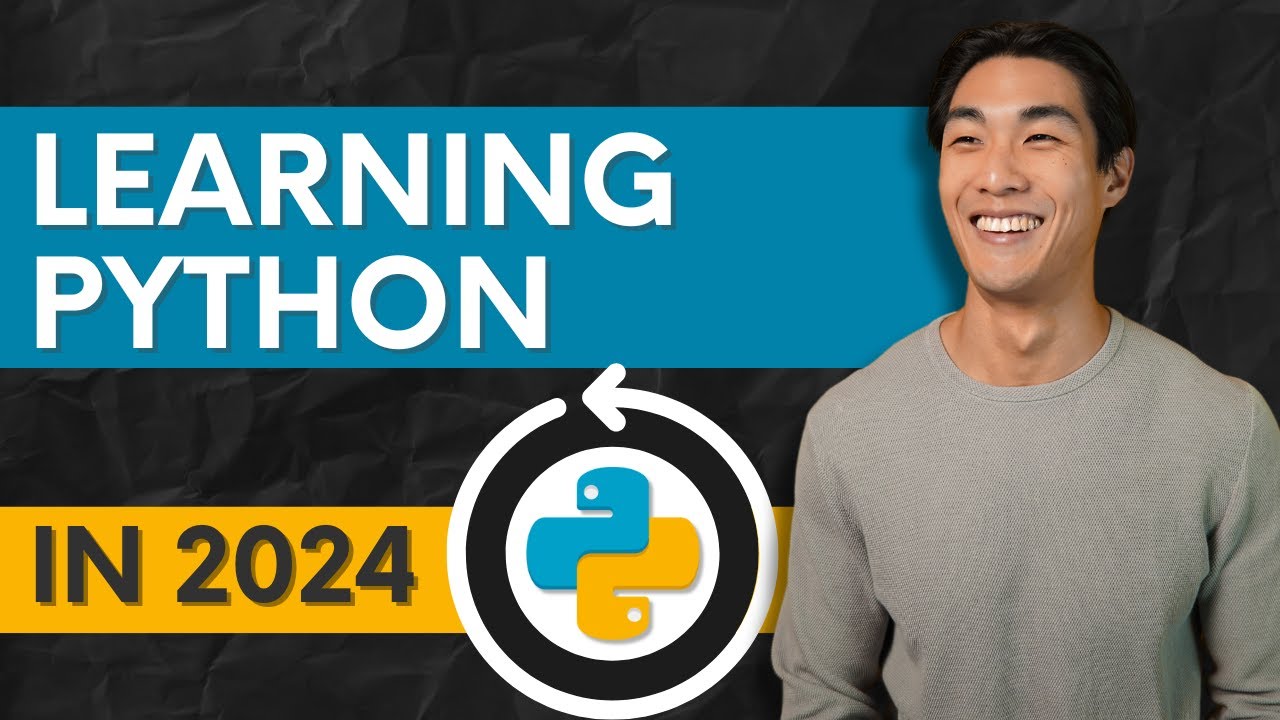
- Master Python basics: Data Types, Loops, and Functions are key.
- Start coding practical Python for data analysis using this video's roadmap.
Study This Video Deeper
Get an AI summary and ask questions about confusing parts in real-time.
Open in Querivo →Chart Your Course: A Complete Data Science Roadmap
So, you've got a handle on Python basics, or you're just curious about where it all leads. This video offers a fantastic bird's-eye view of what it truly takes to become a data scientist. It frames Python's role within the bigger picture, showing you the skills you'll need and a potential timeline to get there. Understanding the whole landscape makes your learning efforts much more directed.
We're talking about the nine essential skills that data science roles typically demand, covering everything from your programming chops to advanced machine learning. Python is definitely highlighted as a cornerstone programming language in this stack, which is good to know! The video breaks down how to allocate your learning time across critical areas like data handling, the math behind it all, and machine learning itself. It even touches on specializations like Natural Language Processing (NLP) and Big Data tools, giving you a glimpse of future possibilities.
If you're aiming for an entry-level data science position, this video is practically a blueprint. It's designed to give you a structured learning path, complete with estimated timelines, so you can set realistic goals. It's definitely worth watching to get that comprehensive understanding before diving too deep into any single area.
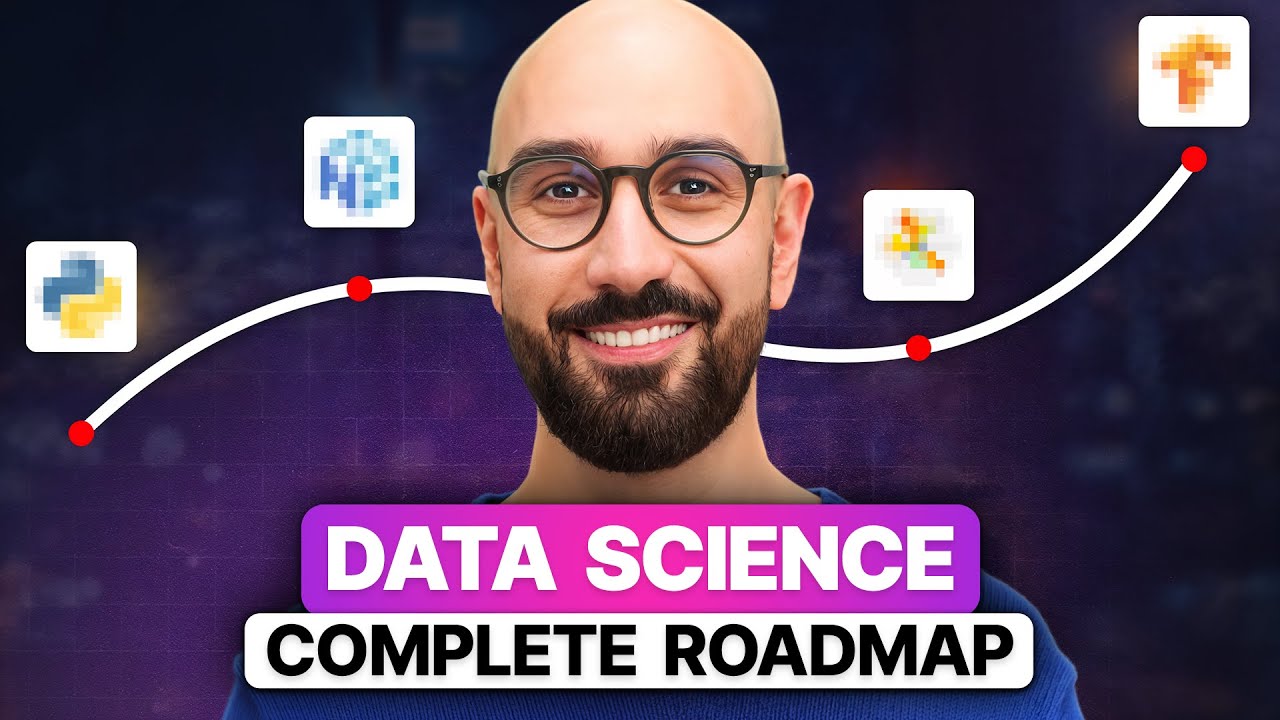
- Understand the 9 essential skills for data scientists.
- Get a structured 12-month roadmap for your data science journey.
Accelerate Your Python Learning with Active Coding
Ever feel like you're stuck in "tutorial hell," watching video after video but not actually getting better at coding? This video tackles that exact problem head-on. It introduces a seriously efficient strategy that cuts through the fluff and gets you writing code faster. The idea is simple: stop passively consuming and start actively creating.
The core principle here is the 80/20 rule – spend a whopping 80% of your time actually writing code and only 20% watching tutorials. It’s a game-changer! You’ll learn how to immediately apply Python basics to small, manageable projects, which is way more effective than just re-watching explanations. Plus, the creator suggests picking a niche to really focus your learning and project development, which makes a ton of sense for building expertise. The goal is to write "Pythonic" code, making your programs more efficient and easier to read.
This is a must-watch for any beginner or intermediate Python learner who feels stalled. If you're looking for a practical, hands-on approach to speed up your learning and actually build things, this video provides that roadmap. It’s all about making learning active and engaging.
- Prioritize active coding: 80% code, 20% tutorials.
- Start building small projects immediately to solidify Python basics.
Master Key Libraries and Build Your Data Science Portfolio
As you progress, you'll want a refined learning path that incorporates modern tools and emphasizes the practical outcome: a portfolio that showcases your abilities. This video delivers exactly that. It cuts through the noise to highlight the most essential Python libraries for data analysis and gives you a clear strategy for using them.
The focus is squarely on those indispensable libraries: Pandas for data wrangling, NumPy for numerical operations, and Matplotlib/Seaborn for visualization. And don't forget Scikit-learn for machine learning! You'll also get practical advice on using modern tooling like VS Code, Jupyter Notebooks, and Google Colab, which are standard in the industry. The creator stresses the importance of creating a clear learning path and mind map for structured progression. Most importantly, it’s all about building practical projects that will form a strong portfolio.
This video is perfect for anyone looking to move beyond basic Python and dive into data analysis. It’s realistic, up-to-date, and provides actionable steps to not only learn but also demonstrate your skills effectively. Building that portfolio is crucial, and this guide shows you how.
- Focus on essential libraries: Pandas, NumPy, Matplotlib, Seaborn, Scikit-learn.
- Build practical projects to create a compelling data science portfolio.
Your Next Steps
Learning Python for data science is an achievable goal through structured learning and practical application. By focusing on core Python, essential libraries like NumPy and Pandas, and adopting an active coding approach, you can build a robust skillset and a compelling portfolio. Ready to dive in?
Your Action Items
- ☐Pick one video from above and watch it on Querivo
- ☐Ask questions and check summaries while watching without breaking your flow
- ☐Use the AI chat to clarify confusing parts and deepen understanding
- ☐Come back for more curated videos on topics you want to master
Turn any YouTube video into an interactive lesson by pasting a link, getting an instant AI summary, and asking questions in real-time.
Turn Any YouTube Video into an Interactive Lesson
Paste any video link, get an instant AI summary, and ask questions in real-time.
Try Querivo Free →Related Videos You Might Enjoy
Looking for more perspectives on this topic? Here are some additional videos worth checking out:
How I Would Learn Python FAST (if I could start over)
This video provides a structured roadmap for learning Python quickly, emphasizing the importance of foundational skills and goal-oriented learning. It advises on development environments, core concepts, and intermediate/advanced topics, particularly for those interested in data science, ML, and AI.

Learn NUMPY in 5 minutes - BEST Python Library!
This video provides a rapid introduction to NumPy, a fundamental Python library for numerical operations, focusing on its speed and built-in functions. It demonstrates how to create NumPy arrays, perform slicing, and apply mathematical functions to array elements, emphasizing its importance for data science and machine learning.
How I use Python as a Data Analyst
This video demonstrates how to use Python for data analysis, focusing on building a real-time job board application. It covers data collection via APIs, storage in a SQL database like BigQuery, and automation using cloud services.

Learn Python in Less than 10 Minutes for Beginners (Fast & Easy)
This video provides a rapid, beginner-friendly introduction to Python programming in under 10 minutes. It covers essential concepts like variables, data types, basic operations, control flow (if/else, loops), and functions, aiming to get viewers started quickly.
How I'd learn Python FAST (if I could start over)
This video provides a roadmap for learning Python quickly, even for beginners who previously struggled. It emphasizes focusing on core fundamentals and essential libraries, using free tools like Google Colab, and building projects to solidify understanding.
Complete Python Programming Roadmap (Zero to Expert) 🐍
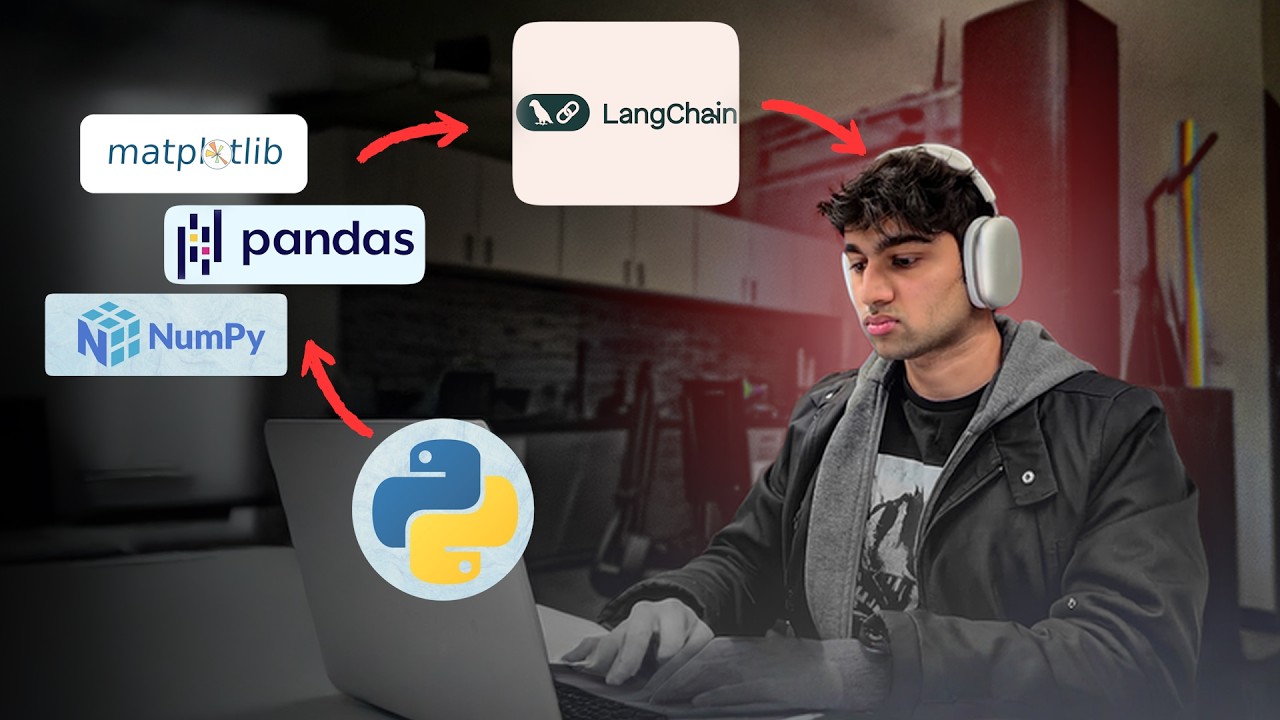
This video provides a comprehensive Python programming roadmap for beginners, guiding them from zero knowledge to becoming proficient developers. It emphasizes hands-on project building, leveraging AI tools, and offers resources like a discounted Udemy course and YouTube challenges for effective learning.