

Ready to dive into React but feeling a bit shaky on the JavaScript prerequisites? You're definitely not alone. Mastering modern JavaScript is actually the bedrock for building efficient and scalable React applications, and honestly, sometimes the core concepts feel more daunting than React itself. This guide cuts through the noise, highlighting essential YouTube tutorials that will equip you with the JavaScript knowledge needed to confidently tackle front-end development with React. We've scoured the platform to find the top videos that demystify crucial JavaScript concepts, from ES6 features to asynchronous programming, empowering your journey into the world of React.
Key Takeaways
- 1Master JavaScript essentials before touching React.
- 2Learn key ES6+ features for cleaner React code.
- 3Understand asynchronous JavaScript for better performance.
- 4Build a strong foundation for effective front-end development.
- 5Confidently tackle React development challenges.
Who this is for
- If you're a front-end developer aiming to learn React.js
- If you're looking to solidify your JavaScript fundamentals for modern web development
- If you're a beginner curious about the core concepts powering React applications
Start Learning with AI-Powered Video Summaries
Get instant summaries, ask questions, and turn any video into an interactive study session.
Try Querivo Free →Build a Solid JavaScript Foundation Before React
You've probably heard it a million times: "You need to know JavaScript before React." But what JavaScript? This video from Coding2GO really nails it by explaining the absolute essential JavaScript concepts that form the prerequisite knowledge for learning React. It's surprisingly short but packed with value, emphasizing that the complexity often lies in mastering JavaScript itself rather than React's syntax. You'll get a clear understanding of why a strong JavaScript base is more critical than memorizing React syntax.
The creator walks you through crucial concepts like object and array destructuring, which are absolute game-changers for cleaner data handling in React. And don't get me started on the spread operator – it's so useful for efficient array and object manipulation! Plus, you'll grasp essential array methods like map, filter, and find for data transformation, which you'll be using constantly in React. Even things like conditional rendering using ternary operators and the logical AND (&&) operator, plus safer property access with optional chaining (?.) and nullish coalescing (??), are covered. Understanding module systems for organizing code and demystifying asynchronous JavaScript with Promises and async/await are also touched upon, giving you a well-rounded picture of what's needed.
- Prioritize JavaScript fundamentals over React syntax itself.
- Practice destructuring, spread operator, and key array methods.
Study This Video Deeper
Get an AI summary and ask questions about confusing parts in real-time.
Open in Querivo →Understand React's Core Purpose and Benefits
So, you're ready to learn React, but what is it, really? This video, unfortunately without a specific title provided in the data, offers a foundational understanding of React JS, its purpose, and its core advantages. While the summary and key topics aren't detailed, the fact that it's from Web Dev Simplified suggests a clear, methodical explanation. It's worth watching to clarify React's role as a UI library versus a framework, and to get a solid introduction to JSX and its role in writing React components. Understanding the concept of component-based architecture is fundamental, and this video likely provides that crucial overview.
It's important to know why React is so popular. This video will probably cover the history of React and the problems it was designed to solve in web development, giving you context for its widespread adoption. For anyone new to React, grasping its core benefits upfront will make the learning process much smoother. You'll get a clearer picture of what to expect and why this library is such a big deal in the front-end development world.

- Clarify React's role as a UI library and its core benefits.
- Grasp the fundamentals of JSX and component-based architecture.
Master ES6+ Features for Modern React Development
Modern React development practically runs on ES6+ features. This video, "How to Learn JavaScript FAST in 2026," from Catherine Li, dives into specific JavaScript features that are heavily used in React, providing practical examples. While the title suggests speed, the content promises a deep dive into what's essential. You'll explore how let and const revolutionize variable declaration, making your code more predictable. Arrow functions are particularly important in React's context, and this video will likely highlight their advantages.
Template literals are a neat way to handle string interpolation, making your code more readable. The video also promises a deep dive into array and object destructuring, which are absolutely vital for working with props and state in React. You'll grasp the practical applications of the spread and rest operators – seriously, these are indispensable. Plus, discovering the power of default parameters and async/await for cleaner asynchronous code will save you a lot of headaches down the line. This is prime JavaScript for React YouTube content right here.

- Understand `let`, `const`, and arrow functions for React code.
- Leverage destructuring, spread/rest operators for efficient data handling.
Unlock Asynchronous JavaScript: The Key to React Performance
Handling asynchronous operations is absolutely critical for building responsive React applications, especially when dealing with API calls. This video from CodeWithHarry, "How much JavaScript is needed to learn React?", focuses on precisely this crucial aspect. It breaks down the fundamental concepts of asynchronous programming, which is essential for understanding how React fetches data and manages updates without freezing the user interface.
You'll learn how to work with Promises to manage asynchronous operations, a foundational skill. But the real magic happens when you master async/await for writing cleaner and more readable asynchronous code. This technique makes your asynchronous logic look almost synchronous, which is a huge win for maintainability. The video will explore common use cases for asynchronous JavaScript in React, like making API calls, and importantly, how to handle errors gracefully in these operations. This is a key piece of the JavaScript for React puzzle, ensuring your applications feel snappy and performant.

- Understand Promises and `async/await` for non-blocking operations.
- Learn to handle API calls and errors effectively in asynchronous code.
Your Next Steps
By mastering these core JavaScript concepts through the highlighted YouTube videos, you'll build a robust foundation for learning and effectively utilizing React.js, paving the way for confident front-end development.
Your Action Items
- ☐Pick one video from above and watch it on Querivo
- ☐Ask questions and check summaries while watching without breaking your flow
- ☐Use the AI chat to clarify confusing parts and deepen understanding
- ☐Come back for more curated videos on topics you want to master
These curated resources are designed to give you the practical JavaScript skills needed to hit the ground running with React. Don't just watch them; actively engage with the concepts.
Turn Any YouTube Video into an Interactive Lesson
Paste any video link, get an instant AI summary, and ask questions in real-time.
Try Querivo Free →Related Videos You Might Enjoy
Looking for more perspectives on this topic? Here are some additional videos worth checking out:
React JS Explained In 10 Minutes

Master React JS in easy way
Top 9 JavaScript topics to know before learning React JS in 2024

Every React Concept Explained in 12 Minutes
What Is React JS? Explained In Tamil | Learn in Just 8 Minutes
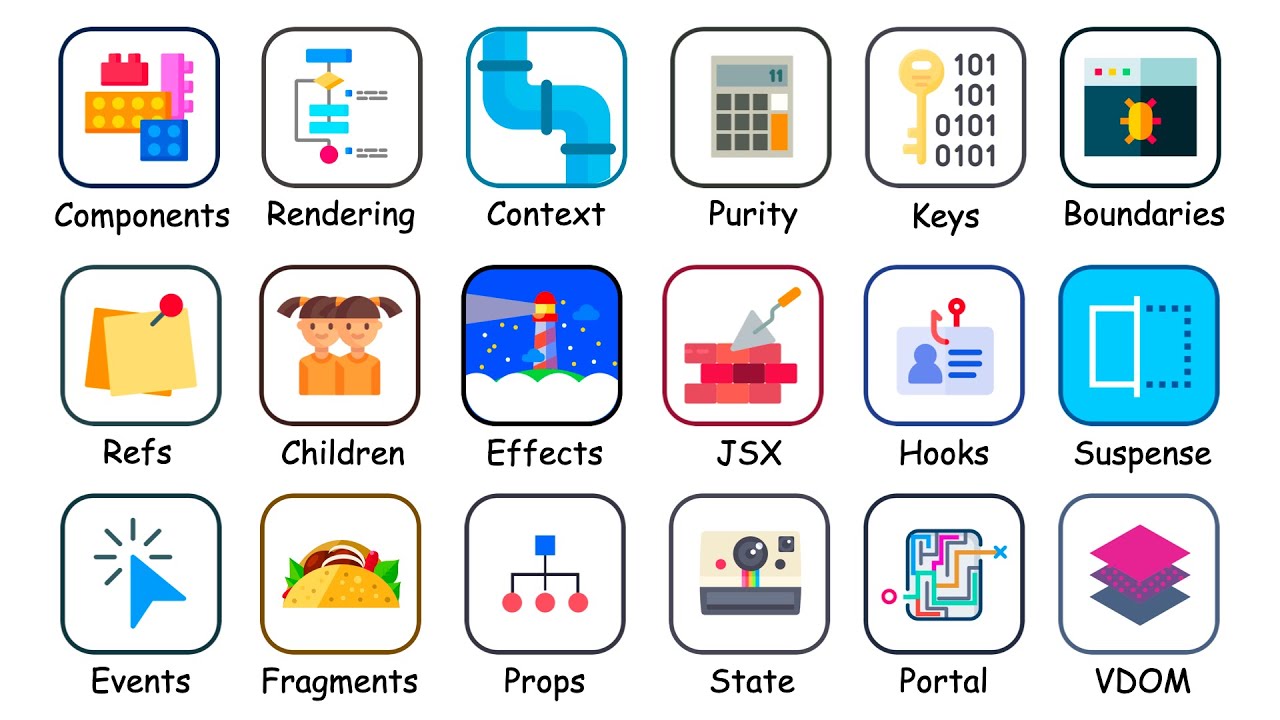
This video explains the fundamentals of React JS in Tamil, covering its history, why it's popular, and how it solves problems like slow page loading using its virtual DOM and component-based architecture. It clarifies that React is a UI library, not a framework, and introduces JSX and the role of Babel.