
Ready to build stunning React components but feel like you're wrestling with JavaScript itself? You're not alone. Many developers find that a strong grasp of JavaScript fundamentals is the key to unlocking React's full potential. This guide will help you hone those essential JavaScript skills, directly applicable to building efficient and robust React applications. We'll explore valuable video resources that bridge the gap between JavaScript and React development, helping you write cleaner, more performant code.
Key Takeaways
- 1Master essential JavaScript for React development.
- 2Learn React Hooks for cleaner state and effects.
- 3Understand Next.js integration for robust apps.
- 4Apply practical JS patterns to React components.
- 5Build more efficient, scalable React applications.
Who this is for
- If you're struggling to connect JS fundamentals to React patterns
- If you want to write more maintainable and efficient React code
- If you're a front-end developer looking to level up your React skills
Start Learning with AI-Powered Video Summaries
Get instant summaries, ask questions, and turn any video into an interactive study session.
Try Querivo Free →Understanding Core JavaScript Concepts for React
Before diving deep into React, it's crucial to solidify your understanding of the underlying JavaScript concepts. This video by Web Dev Simplified offers a clear assessment of whether your current JavaScript knowledge is sufficient for learning React. It helps you identify any gaps and provides a direct path to strengthening those foundational elements. Understanding JavaScript deeply means you can approach React not as a new language, but as a powerful library built upon familiar principles, making the learning curve much smoother and more intuitive.

- Assess your current JavaScript knowledge relative to React requirements.
- Identify and address any JavaScript fundamentals that are essential for React.
Essential JavaScript Patterns for Cleaner React Components
Writing clean, maintainable React code is a skill that heavily relies on solid JavaScript fundamentals. This video by Coding2GO gets right to the heart of it, showcasing practical JavaScript patterns that directly translate to better React components. It’s all about applying modern JavaScript features to avoid common anti-patterns and make your code more readable. You'll see how to leverage ES6+ syntax for more concise React code – no more verbose boilerplate! Destructuring and spread syntax for handling props and state efficiently? Yep, it's covered. And of course, mastering array methods like map and filter is essential for dynamic list rendering in React. Plus, you'll get a taste of functional programming concepts that really help in creating reusable and predictable components. This is invaluable for anyone looking to write idiomatic React.
- Leverage modern JavaScript syntax (ES6+) for more concise React code.
- Implement array methods like `map` and `filter` for dynamic list rendering.
- Apply functional programming concepts for component reusability.
Unlocking React's Potential with Advanced JavaScript Concepts
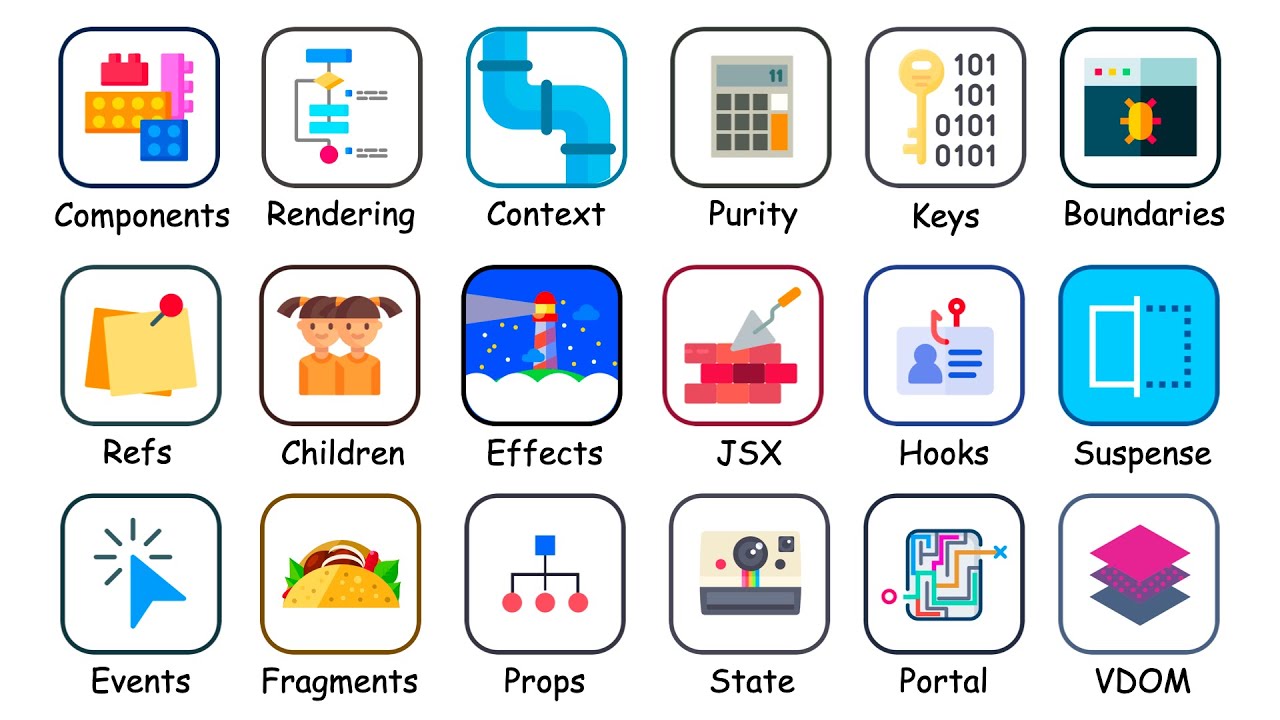
Ready to move beyond the basics and build truly complex, performant React applications? This video by Code Bootcamp takes you there. It explores more advanced JavaScript concepts that are incredibly beneficial for any serious React developer. We're talking a deeper dive into closures and how they can be applied effectively within your React code, which is key for understanding many advanced patterns. You'll also explore immutability patterns in JavaScript and really nail down how they apply to managing React state, preventing common bugs. Then there's the context API and advanced state management patterns using JavaScript – crucial stuff for building scalable applications. And for performance? This tutorial touches on essential optimizations through memoization and working with efficient data structures, ensuring your applications run smoothly.
- Deepen your understanding of closures and their application in React.
- Master context API and advanced state management patterns using JavaScript.
- Learn optimization techniques like memoization for React performance.
Mastering State and Side Effects with React Hooks
Hooks are pretty central to modern React development, aren't they? But using them effectively can sometimes feel like a minefield. The video by Dennis Ivy dives deep into common pitfalls and the best practices you'll want to adopt. We're talking about how to write genuinely cleaner, more efficient code by really understanding state immutability. You'll learn to spot and ditch unnecessary state, which seriously simplifies your component logic. Plus, it covers how to handle derived or computable values without creating extra, redundant state. And optimizing useEffect? That's a big one. Getting the dependency arrays right and minimizing its necessity will make your app perform better. This practical guidance is essential for writing robust and efficient React components.

- Understand and implement React State Immutability for predictable updates.
- Identify and avoid unnecessary state to simplify component logic.
- Optimize `useEffect` for better application performance.
Bridging React's UI Power with Next.js's Framework Capabilities
So, you've got React down, but what about Next.js? It's easy to get confused about how they fit together. This video by Unknown does a fantastic job of clarifying that relationship, explaining how Next.js builds upon React's core. It breaks down their individual strengths and weaknesses, and crucially, why using them together is often the smart move for building production-ready applications. Think improved performance and better SEO out-of-the-box. You'll get a clear picture of React as a UI library versus Next.js as a full-fledged framework, and how Next.js can seriously speed up development, data fetching, and even routing. Understanding this synergy is key to building modern, performant web applications.

- Differentiate React as a UI library and Next.js as a comprehensive framework.
- Understand how Next.js enhances development speed, data fetching, and routing.
- Recognize the benefits of combining React with Next.js for production apps.
Your Next Steps
By focusing on these key JavaScript skills and understanding their application within React, you can build more robust, efficient, and maintainable components. Mastering state management, hook optimization, and leveraging modern JavaScript patterns are crucial steps towards becoming a proficient React developer. Don't just watch these tutorials; actively apply the concepts. Try refactoring existing components with the patterns you learn, or build small projects from scratch to reinforce your understanding.
Your Action Items
- ☐Pick one video from above and watch it on Querivo
- ☐Ask questions and check summaries while watching without breaking your flow
- ☐Use the AI chat to clarify confusing parts and deepen understanding
- ☐Come back for more curated videos on topics you want to master
This curated list of JavaScript for React tutorials is designed to give you a solid foundation and advanced insights. Ready to put these lessons into practice? Start building your next React component today!
Turn Any YouTube Video into an Interactive Lesson
Paste any video link, get an instant AI summary, and ask questions in real-time.
Try Querivo Free →Related Videos You Might Enjoy
Looking for more perspectives on this topic? Here are some additional videos worth checking out:
Top 9 JavaScript topics to know before learning React JS in 2024

How much JavaScript is needed to learn React?

Master React JS in easy way

2025: Why JavaScript and React Aren’t the Main Game Anymore.

7 React Lessons I Wish I Knew Earlier
This video shares seven crucial React lessons the instructor wishes they knew earlier to write cleaner, more efficient code. It covers immutability, avoiding unnecessary state, handling derived and computable values, proper key usage in lists, dependency array management, and minimizing the use of useEffect.
What is React JS? How does React JS Work - Features of React Js #1

What Is React JS? Explained In Tamil | Learn in Just 8 Minutes

Next js vs React - (2025) Difference Explained
This video explains the relationship between React and Next.js, positioning them as partners rather than competitors. It details their individual strengths, common use cases, and how Next.js enhances React's capabilities for building production-ready, high-performance, and SEO-friendly web applications.