
Struggling to make sense of German's intricate grammar? You're not alone! The cases, tenses, and seemingly chaotic word order can feel like an insurmountable wall for many learners. But what if we told you that cracking the code to German grammar is more accessible than you think? With the right visual aids and clear explanations, that confusing sentence structure can start to make perfect sense.
Key Takeaways
- 1Master German grammar with expert video guides.
- 2Conquer cases, tenses, and word order challenges.
- 3Learn practical tips for building German sentences.
- 4Build confidence in your German language skills.
- 5Turn grammar struggles into clear understanding.
Who this is for
- If you're finding German grammar rules confusing and complex
- If you're looking for clear, visual explanations to learn German
- If you're a beginner or intermediate learner aiming for fluency
Start Learning with AI-Powered Video Summaries
Get instant summaries, ask questions, and turn any video into an interactive study session.
Try Querivo Free →Navigating the complexities of German grammar can feel like trying to assemble a puzzle without the picture on the box. Cases, verb conjugations, and sentence construction rules often leave learners scratching their heads. Thankfully, the internet, and YouTube in particular, is bursting with fantastic resources that break down these challenging concepts into bite-sized, understandable pieces. We've sifted through the noise to find the absolute best YouTube videos that demystify German grammar, offering clear explanations, practical examples, and effective strategies to help you finally get a handle on sentence structure, cases, and verb tenses. Prepare to transform your confusion into clarity as we dive into these must-watch tutorials.
Unlock the Secrets of the Accusative Case
Ever wonder why certain words change their endings in German? The accusative case is a fundamental concept, and this video tackles it head-on. You'll discover its crucial role as the direct object in a sentence, which is super important for understanding who or what is directly affected by the action of a verb. The creator does a really good job of explaining how to spot the accusative and, perhaps more importantly, how to correctly modify your articles, especially for those tricky masculine nouns. This video provides a very clear distinction between nominative and accusative based on the presence of one or two entities (people/things) in a sentence, which is an intuitive way to grasp the concept. It also highlights common pitfalls and provides specific examples for each grammatical gender. Seriously, getting this right is a game-changer for building solid German sentences.
- Understand the accusative case as the sentence's direct object.
- Practice identifying and changing articles, especially masculine ones.
- Learn an intuitive distinction between nominative and accusative cases.
Study This Video Deeper
Get an AI summary and ask questions about confusing parts in real-time.
Open in Querivo →Conquer German Word Order with Practical Strategies
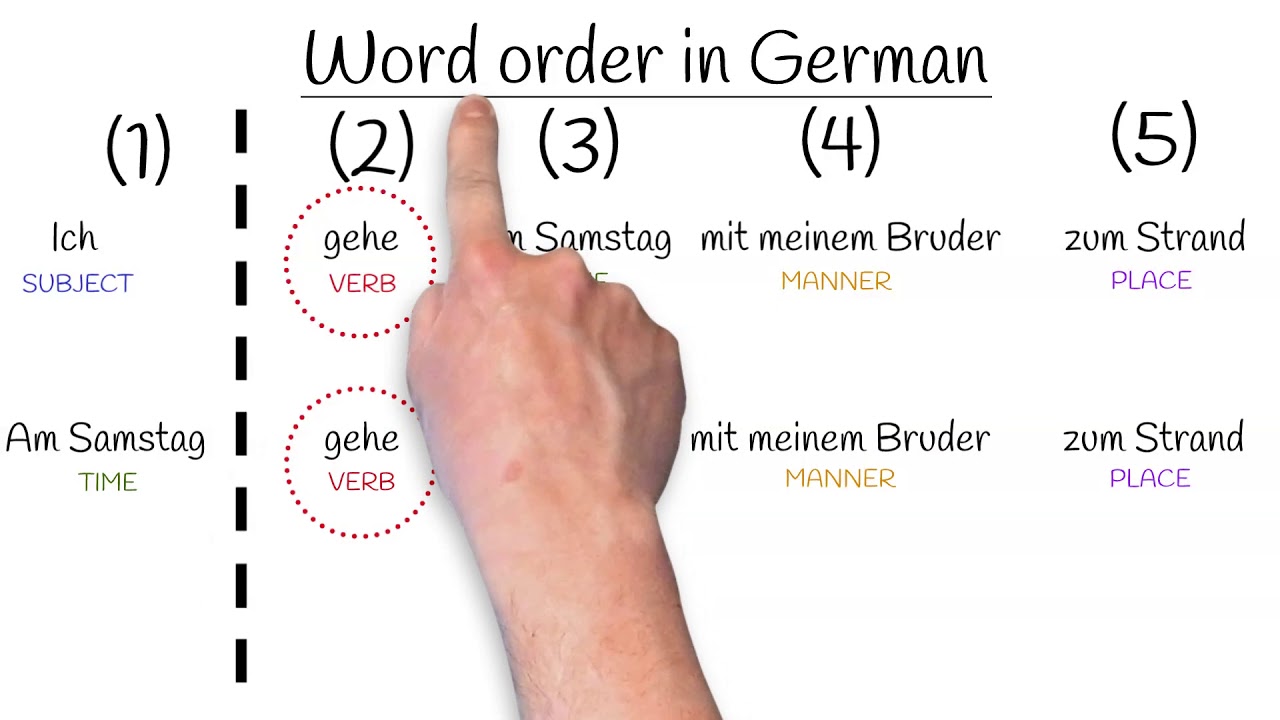
German sentence structure can feel a bit like a wild west of word placement to newcomers. This video offers valuable content that can help guide you through the intricacies of German word order. While specific tricks aren't detailed in the provided data, the creator's approach is likely to be highly practical, focusing on systematic understanding of where different parts of your sentence should go – things like time, reason, manner, and place. By paying attention to these explanations, you'll be able to construct grammatically correct and, importantly, natural-sounding German sentences. It really helps to bring order to what might otherwise feel like linguistic chaos. We recommend actively trying to rearrange sentences yourself after watching this video to solidify your understanding.

- Learn practical strategies for understanding German sentence structure.
- Aim to construct grammatically correct and natural-sounding German sentences.
Demystify All Four German Cases with Simple Questions
Understanding German cases is absolutely essential, and let's be honest, it's often where learners get stuck. This video provides a refreshingly straightforward approach by offering practical questions you can ask yourself to identify the function of each of the four cases: Nominativ, Genitiv, Dativ, and Akkusativ. It’s not just about memorizing rules; it’s about understanding how each case works within a sentence and seeing them all interact through clear examples and even dialogues. This method makes identifying the subject, possession, indirect object, and direct object much more intuitive. You'll definitely pick up on how these cases function together. For an extra boost, try writing your own sentences and then applying these questions to identify the case of each noun.
- Use targeted questions to identify each of the four German cases.
- Grasp how different cases function and relate within sentences.
- Apply these questioning techniques to your own sentence construction.
Grasp All Six German Tenses with One Easy Method
German tenses can seem daunting, especially with more than the English basics to contend with. This video offers a truly strategic approach, presenting a simplified method to understand all six German tenses. You'll learn not just what each tense is called, but how they effectively indicate completed or ongoing actions and their timing relative to the speaker, by focusing on two core distinctions: whether an action is ongoing/completed and its timing relative to the speaker. This simplification is particularly valuable for intermediate learners looking to consolidate their knowledge. Plus, it highlights the critical role adverbs and prepositions play in pinpointing the exact moment an action occurs – a detail often overlooked by learners. The explanation of modern usage, particularly the difference between Perfekt and Präteritum, is surprisingly helpful and offers a clear path to understanding these often-confused tenses.
- Understand the six German tenses with a simplified method.
- Recognize how adverbs and prepositions clarify action timing.
- Grasp the distinctions between Perfekt and Präteritum for modern usage.
Your Next Steps
By leveraging these excellent YouTube resources, you can gain a confident understanding of German cases, sentence structure, and verb tenses, transforming your learning journey. These videos offer clear, actionable insights that are perfect for anyone looking to improve their German grammar. Remember, consistent practice is key. Try to actively incorporate the concepts you learn into your speaking and writing. Use the provided examples as a foundation and then create your own variations. The more you engage with the material, the more natural it will become.
Your Action Items
- ☐Pick one video from above and watch it on Querivo
- ☐Ask questions and check summaries while watching without breaking your flow
- ☐Use the AI chat to clarify confusing parts and deepen understanding
- ☐Come back for more curated videos on topics you want to master
Ready to take your German grammar skills to the next level? These curated videos are your roadmap to mastering the complexities of the German language.
Turn Any YouTube Video into an Interactive Lesson
Paste any video link, get an instant AI summary, and ask questions in real-time.
Try Querivo Free →Related Videos You Might Enjoy
Looking for more perspectives on this topic? Here are some additional videos worth checking out:
German Word Order? Nothing Easier Than That!
This video introduces the "T-Kamalaw" acronym as a simple method to understand and construct German word order. It breaks down sentence components into Temporal (when), Causal (why), Modal (how), and Local (where) to create a standard sentence structure.