
Tired of feeling lost in German sentence structure? Unlock the secrets of German grammar with our curated YouTube tutorial guide! These videos offer clear explanations and practical examples, making complex concepts feel accessible to learners of all levels.
Key Takeaways
- 1Your essential guide to mastering German grammar on YouTube.
- 2Learn clear German sentence structure and word order, understanding the pivotal role of the verb.
- 3Understand German cases: Nominative, Accusative, Dative, and how they affect sentence meaning.
- 4Tame regular and irregular German verb conjugations with effective strategies.
- 5Build confidence with essential German sentence construction, from simple to complex structures.
Who this is for
- If you're struggling with German sentence construction and word order, particularly the placement of verbs.
- If you're trying to grasp the complex German case system and how it influences articles, nouns, and pronouns.
- If you're a beginner looking for clear, free German grammar lessons that break down core concepts.
- If you want to improve your accuracy in German verb conjugation for more natural-sounding speech.
Mastering German Word Order: The Key to Clear Sentences
German sentence structure can feel a bit like a puzzle at first glance, especially when compared to English. The video "Basic Word Order in German" by mugridge language breaks down the fundamental rules, explaining how the verb often takes center stage, typically sitting in the second position in main clauses. This is a critical rule that dictates the flow and meaning of your sentences. You'll discover how this seemingly simple rule can dramatically change the emphasis and structure of your communication.
But it's not just about the verb's position in main clauses. This tutorial also dives into how dependent clauses shift things, pushing the verb to the very end. This is a crucial concept for building more complex German sentences, and the creator offers practical strategies for forming basic questions and effectively negating statements. Understanding these word order nuances, particularly the V2 rule in main clauses and verb-final in subordinate clauses, is definitely a game-changer for building fluency. For viewers, it's recommended to actively practice constructing both types of sentences after watching to solidify this understanding.
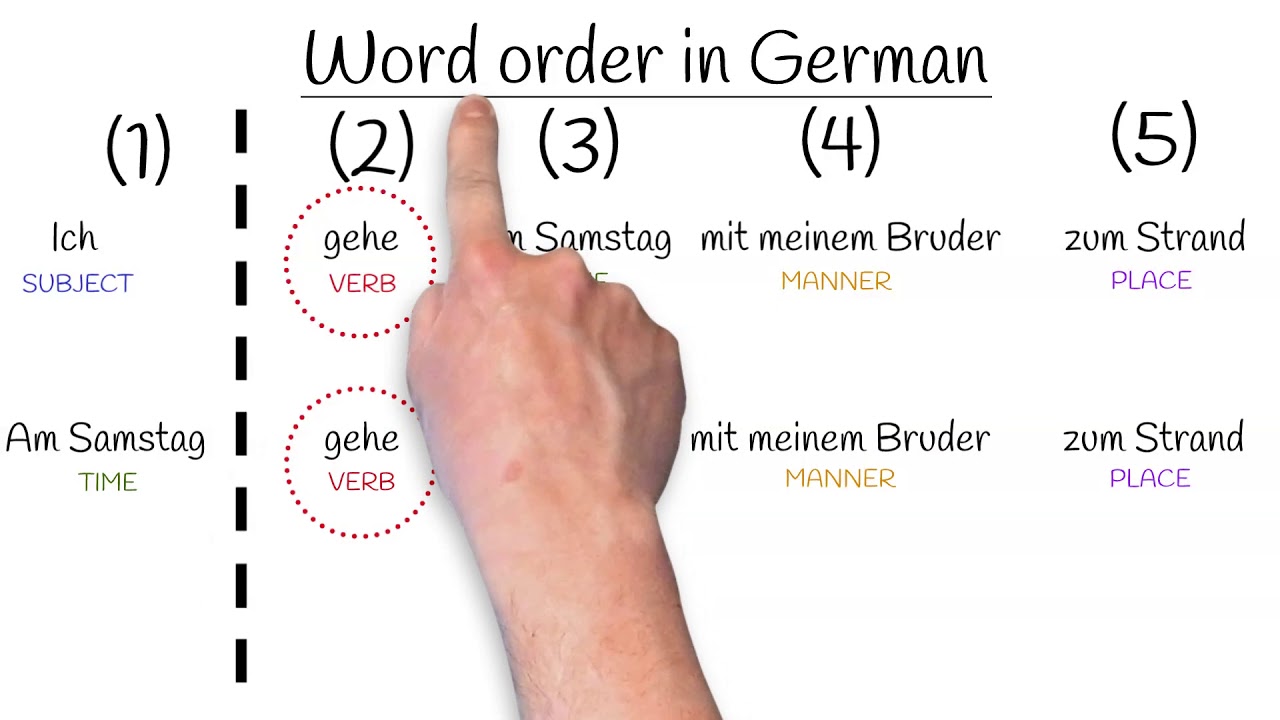
- German verbs usually sit in the second position in main clauses (V2 rule).
- Practice forming dependent clauses where the verb goes to the very end.
- Actively construct example sentences for both main and subordinate clauses to reinforce word order rules.
Conquering German Cases: A Visual Guide to Nominative, Accusative, and Dative
Navigating the world of German cases – Nominative, Accusative, and Dative – often feels like the biggest hurdle for learners. The video "Mastering 'Sein' in the Present Tense | Essential Verb Conjugation Guide! | German Grammar 1080p💪🏼🔥" by German Lessons with Herr Ferguson tackles those challenges head-on, offering a clear and visually guided explanation of each case's function. While the title highlights verb conjugation, this video provides valuable context for cases by demonstrating how verbs like 'sein' interact with subjects and objects, thus illustrating case usage implicitly. You'll get to see exactly how these cases affect your articles, nouns, and pronouns, making it much easier to choose the correct form.
The creator meticulously explains the Nominative case, which usually identifies the subject of the sentence. Then, the video clarifies the Accusative case, explaining when objects receive the action of the verb. Crucially, the Dative case, often tricky, is demystified with practical examples that show its role in indirect objects or with specific prepositions and verbs that require the dative. Tips for identifying which case to use are a real lifesaver here, helping you build sentences with more confidence. A practical tip for viewers is to create flashcards or charts detailing which prepositions govern which cases, and to pay close attention to how verbs influence the case of their direct and indirect objects.
- Grasp the fundamental function of Nominative, Accusative, and Dative cases in German.
- Use the practical examples provided to identify the correct case for articles, nouns, and pronouns in different sentence structures.
- Note down verbs and prepositions that require specific cases to aid in memorization.
German Verb Conjugation Made Simple: Taming Regular and Irregular Verbs
Verb conjugation is the backbone of speaking any language fluently, and German is no exception. The video "German Grammar for Beginners: The ONLY Guide You’ll Ever Need!" by German With Emtiaz presents a refreshingly systematic approach to mastering German verbs, focusing on the present tense. It’s surprisingly straightforward once you understand the patterns, and this tutorial makes that goal feel much more attainable.
You'll get to grips with how regular verbs change their endings based on the subject pronoun (ich, du, er/sie/es, wir, ihr, sie/Sie). Importantly, you'll learn to spot the common patterns and quirks of irregular verbs, which often have stem changes (e.g., 'e' to 'i' or 'ie' in the second and third person singular). The creator also includes helpful mnemonic devices and practical exercises, which are definitely worth checking out for reinforcing your learning. For learners, a practical tip is to practice conjugating a new verb by writing out all six forms for each subject pronoun, and then using that verb in a simple sentence. This active recall is far more effective than passive viewing.
- Master regular verb conjugations in the present tense by recognizing the standard endings.
- Learn strategies and common patterns for remembering irregular verb forms and their stem changes.
- Practice conjugating verbs actively, writing out all forms and using them in sentences.
How to Learn German Fast - Tips From a Native Speaker
For those looking for accelerated progress, the video "How to Learn German Fast - Tips From a Native Speaker" by Max Yoko offers invaluable insights directly from a native speaker's perspective. This resource goes beyond just grammar rules and delves into effective learning strategies that can significantly speed up your journey to fluency. The creator shares practical, actionable advice that learners can implement immediately.
This tutorial is crucial because it contextualizes grammar learning within a broader language acquisition framework. You'll receive tips on immersion, consistent practice, and the importance of not being afraid to make mistakes. The creator emphasizes active learning and finding enjoyable ways to engage with the language, which are key to long-term motivation and retention. For viewers, the takeaway is to integrate these strategic tips into your daily study routine. For instance, try to incorporate German into your hobbies, listen to German music or podcasts, or find a language exchange partner to practice speaking regularly. This holistic approach, combined with focused grammar study, is the most efficient path to mastering German.

- Gain practical strategies from a native speaker to accelerate German learning.
- Understand the importance of immersion, consistent practice, and embracing mistakes.
- Integrate active learning methods and enjoyable engagement to maintain motivation.
Your Next Steps
By leveraging these recommended German grammar YouTube tutorials, you can gain a solid grasp of the essentials, from word order and cases to verb conjugations and effective learning strategies. Consistent practice with these visual and advice-driven resources will definitely pave your way to confident German communication. Remember that understanding the 'why' behind grammar rules, as explained in these videos, is just as important as memorizing them.
Your Action Items
- ☐Pick one video from above and watch it on Querivo to start your interactive learning journey.
- ☐Ask questions and check AI-generated summaries while watching without breaking your flow.
- ☐Use the AI chat to clarify confusing grammar points and deepen your understanding of concepts like cases and verb placement.
- ☐Come back for more curated videos on topics you want to master, applying the learning strategies you've gained.
Ready to master German grammar? Start watching these videos today and take your language skills to the next level!
Turn Any YouTube Video into an Interactive Lesson
Paste any video link, get an instant AI summary, and ask questions in real-time. Enhance your German learning with interactive summaries and Q&A.
Try Querivo Free →Related Videos You Might Enjoy
Looking for more perspectives on this topic? Here are some additional videos worth checking out:
Master German Grammar: Essential A2 Tips You Need to Know!
Speak German Like a Pro While Traveling! | Essential German Phrases for Tourists

120 Essential German words for B1 Level Mastery
Introduction to German: Introduction to German Grammar
This video introduces the fundamental concepts of German grammar, focusing on word order. It explains that while basic sentences share the Subject-Verb-Object (SVO) structure with English, German grammar offers more flexibility by allowing rearrangements as long as the verb remains in the second position. The video also covers how to form dependent clauses, negate sentences, and create questions.