
Embarking on your coding journey can feel a bit like staring at a mountain – exciting, but also undeniably daunting. But here's the good news: with the right tools and guidance, you can build a solid foundation that will serve you for years to come. This guide is specifically designed to help absolute beginners grasp the core programming concepts, all through the incredibly approachable and powerful language of Python.
Key Takeaways
- 1Your essential guide to Python programming basics
- 2Learn key concepts like variables, loops, and conditionals
- 3Master data organization with Python lists
- 4Build confidence for your coding career
- 5Start building real applications faster
Who this is for
- If you're completely new to coding and feel overwhelmed
- If you're a student looking to build a strong CS foundation
- If you're aiming to switch careers into tech and need a starting point
Start Learning with AI-Powered Video Summaries
Get instant summaries, ask questions, and turn any video into an interactive study session.
Try Querivo Free →Mastering the Building Blocks: Variables and Data Types in Python
Understanding what goes on behind the scenes when your code runs is absolutely key. This video, "Learn Python in Less than 10 Minutes for Beginners (Fast & Easy)" by Indently, dives straight into the absolute fundamentals: variables and data types. Think of variables as little labeled boxes where you can store all sorts of information your program needs to remember. You'll learn how to create these boxes (declare them) and what to put inside them (assign values). The creator emphasizes the speed and ease of learning Python, making it an ideal first language.
The creator also touches on Python's dynamic typing, which is pretty cool because you don't have to explicitly tell Python what kind of data a variable will hold beforehand. It figures it out on its own. This makes Python feel super intuitive, especially when you're just starting out. You'll get a clear picture of common types like numbers (integers and floats), text (strings), and true/false values (booleans). Seriously, these are the absolute bedrock of all programming. To make the most of this video, try creating your own variables as the creator demonstrates and experiment with different data types.
- Variables are fundamental for storing data.
- Familiarize yourself with Python's core data types.
Making Decisions: Understanding Conditional Statements (If-Else)
But what if your program needs to do different things based on certain conditions? That's where conditional statements come in, and this video is your go-to for understanding them. You'll learn how to write code that can actually make decisions, guiding your program's flow like a traffic light. This is a crucial concept that moves your programs beyond simple sequences of instructions.
You'll get to grips with if, elif (which is just Python's way of saying "else if"), and else. Plus, you'll see how to use comparison operators – think greater than, less than, equal to – to build logical expressions that power these decisions. This is where your code starts to get really interesting, allowing it to react to different inputs and scenarios. It’s surprisingly straightforward once you see it in action. When watching, pause the video and try to predict what the output will be for different conditions you can imagine.

- Control program flow with `if`, `elif`, and `else` statements.
- Learn to use comparison operators to create logical conditions.
Repeating Actions: A Deep Dive into Loops (For and While)
Imagine needing to perform the same action a hundred times. Typing it out each time? No thanks! This video tackles loops, which are essential for automating repetitive tasks. You’ll learn how to tell your code, "Do this thing over and over until I say stop," or "Do this for every item in this list." Loops are fundamental to efficient programming and will save you countless hours.
We're talking about for loops, which are fantastic for iterating through sequences like lists or strings, and while loops, which keep going as long as a certain condition remains true. Understanding how to control loops with break (to exit early) and continue (to skip an iteration) is also super handy. Loops are one of those concepts that, once you "get" them, you'll start seeing them everywhere and using them constantly. It's a real game-changer for efficiency. As you watch, try to think of real-world scenarios where loops would be incredibly useful.
- Automate tasks using `for` and `while` loops.
- Master loop control with `break` and `continue` statements.
Organizing Data: Introduction to Python Lists
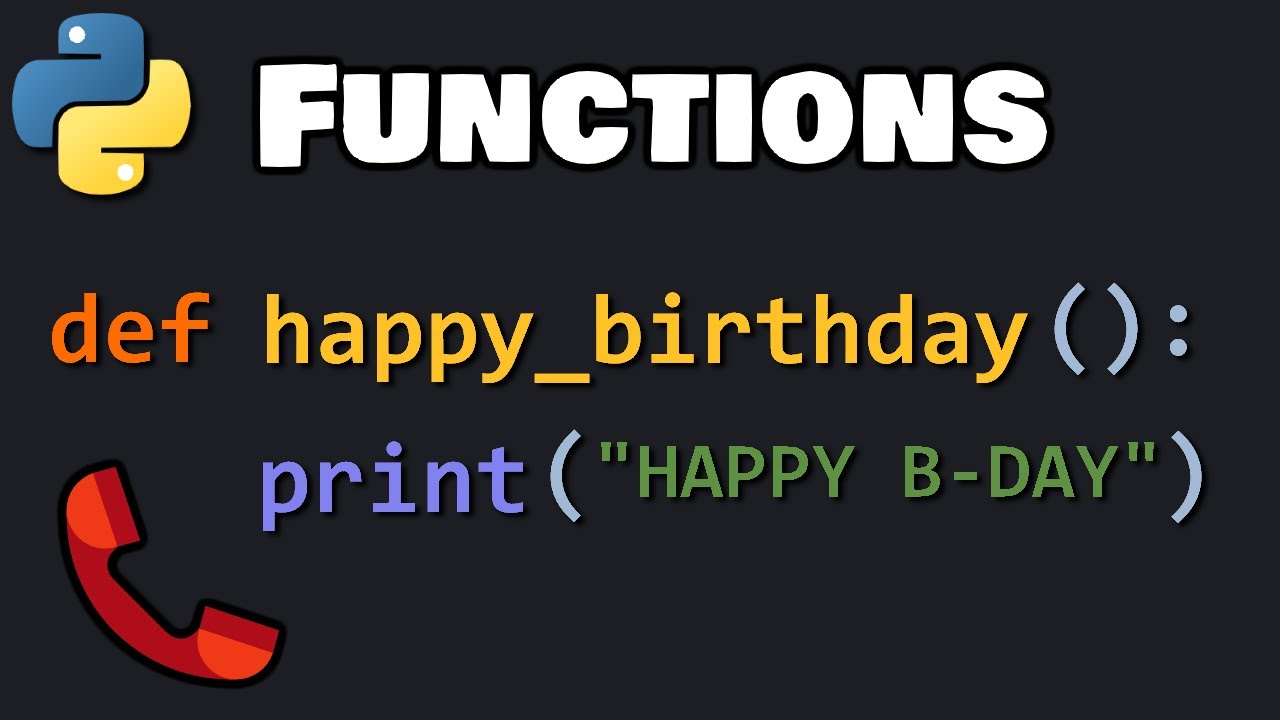
So far, we've looked at individual pieces of data. But often, you need to store and manage collections of related items. That's precisely what lists are for, and this video by Bro Code provides a clear, practical introduction. Python lists are incredibly versatile and are probably one of the most frequently used data structures you'll encounter. They are your primary tool for handling multiple pieces of data together.
You'll discover how to create lists, how to access individual items within them using indices (remembering that Python counts from zero!), and importantly, how to modify them. This includes adding new items, removing existing ones, or even changing the values already stored. The creator walks you through common operations and methods that make working with lists a breeze. Seriously, mastering lists will unlock a whole new level of data manipulation for you. Practice creating lists of your favorite things and then try adding, removing, and changing items within them.
- Understand lists as a fundamental data structure for collections.
- Learn to create, access, and modify elements within lists.
Navigating Your Learning Journey
While these videos provide invaluable content for grasping Python's core concepts, it's also important to have a realistic perspective on learning to code. The video "How to Learn to Code - 8 Hard Truths" by Fireship, though not directly teaching Python syntax, offers crucial insights into the realities of becoming a developer. It highlights that the path requires persistence, understanding, and facing challenges head-on. Complementing this with a video like "Do THIS instead of watching endless tutorials - how I’d learn Python FAST…" by Tech With Tim can offer practical strategies to avoid getting stuck in tutorial purgatory. This creator's approach emphasizes active learning and focused practice, which is vital after absorbing the foundational concepts from the other videos.
By diving into variables, data types, conditional logic, loops, and lists, you've taken significant steps toward truly understanding core programming concepts using Python. These foundational elements aren't just abstract ideas; they are the essential building blocks that enable you to create more complex, dynamic, and powerful applications. You're well on your way to building your first programs!
Your Action Items
- ☐Pick one video from above and watch it on Querivo
- ☐Ask questions and check summaries while watching without breaking your flow
- ☐Use the AI chat to clarify confusing parts and deepen understanding
- ☐Come back for more curated videos on topics you want to master
These curated videos offer a fantastic starting point for anyone looking to build a strong foundation in programming. The journey from beginner to confident coder is a marathon, not a sprint, but having access to clear, concise explanations like these makes all the difference. Remember to actively code along and experiment to solidify your understanding.
Turn Any YouTube Video into an Interactive Lesson
Paste any video link, get an instant AI summary, and ask questions in real-time.
Try Querivo Free →Related Videos You Might Enjoy
Looking for more perspectives on this topic? Here are some additional videos worth checking out:
10 Important Python Concepts In 20 Minutes
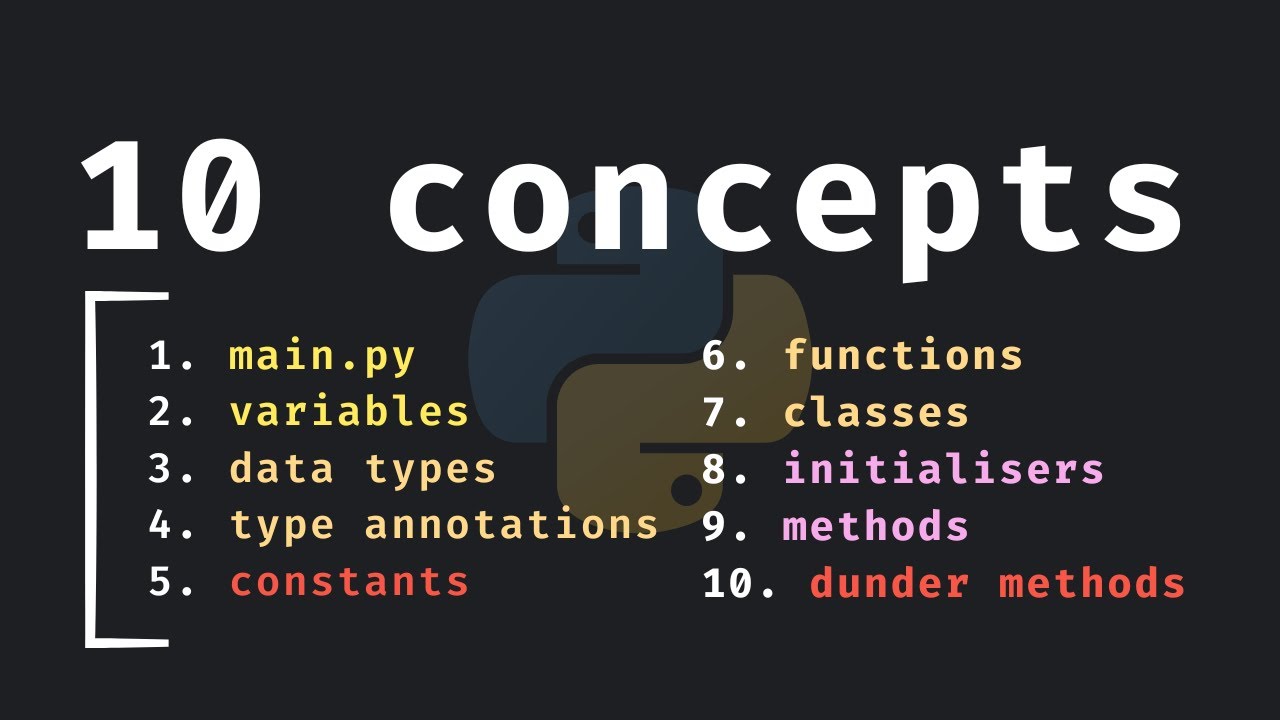
How I Would Learn Python FAST (if I could start over)

100+ JavaScript Concepts you Need to Know
#26 Python Tutorial for Beginners | Array in Python
This video introduces arrays in Python, explaining their core difference from lists and tuples: the requirement for all elements to be of the same data type. It covers how to import and create arrays, the importance of type codes for specifying data types (like integers and floats), and demonstrates basic usage and error handling.