
Tired of spending countless hours studying only to feel like you're not retaining any information? You're not alone. In today's information-rich world, simply putting in the hours isn't enough. We need to be strategic, leveraging proven methods that work with our brain's natural learning processes. This curated selection of YouTube videos offers a roadmap to achieving just that, focusing on effective note-taking, active recall, and science-backed study habits that will transform your academic performance and lifelong learning journey.
Key Takeaways
- 1Master effective note-taking for better retention.
- 2Learn science-backed study strategies.
- 3Implement active recall & spaced repetition.
- 4Transform your study habits.
- 5Boost academic performance with proven techniques.
Who this is for
- If you're a student struggling to keep up with coursework
- If you're a lifelong learner wanting to absorb new information more effectively
- If you're looking for practical, actionable study tips you can use immediately
Start Learning with AI-Powered Video Summaries
Get instant summaries, ask questions, and turn any video into an interactive study session.
Try Querivo Free →Unlock Science-Backed Study Strategies for Deeper Learning
Feeling overwhelmed by the sheer volume of information you need to learn? The video "How I Study SMARTER, Not HARDER (10 Science-Based Tips)" by RESPIRE tackles that head-on, debunking common study myths like passive re-reading and steering you towards methods that actually work, based on solid scientific research. It's about working smarter, not just harder, by understanding how your brain learns best. You'll discover how to structure your study time more effectively and why minimizing distractions is absolutely crucial for retaining anything.
The real game-changer here is the emphasis on active engagement. Passive activities like rereading or highlighting simply don't cut it for deep understanding. This video highlights the power of testing yourself – retrieval practice – as a far superior method for solidifying knowledge. Plus, it introduces interesting concepts like the 'Gap Effect,' which explains the benefits of strategically revisiting material, and the surprising effectiveness of teaching others. If you're looking to move beyond superficial cramming and truly understand your subjects, this is a fantastic starting point. For practical application, consider how you can integrate these "10 Science-Based Tips" into your weekly study schedule, perhaps dedicating specific time slots to active recall exercises rather than simply rereading notes.

- Ditch ineffective study myths for evidence-based methods.
- Try retrieval practice (testing yourself) to boost retention.
Master Active Learning: From Concepts to Mnemonic Devices
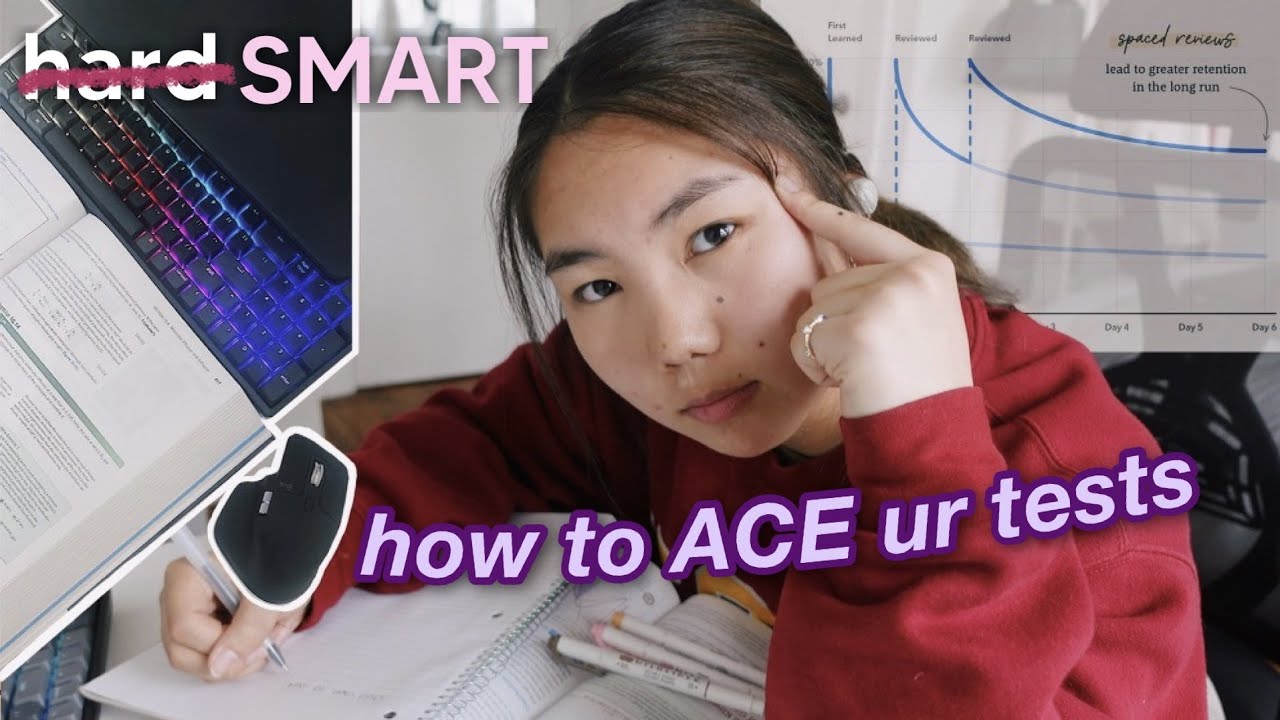
Sometimes, the biggest hurdle isn't the material itself, but how we approach it. The video "how i study SMART, not HARD (high school students must watch)" by Annie Long dives into practical ways to engage more deeply with your studies. It champions breaking down study sessions into manageable phases, offering a detailed, actionable timeline (e.g., 7 days out, 5 days out, 3 days out) that seriously helps maintain focus and prevents burnout. We're talking about making learning feel less like a marathon and more like a series of achievable sprints, ensuring you're proactively learning rather than passively reviewing.
You'll also learn the importance of crafting a dedicated study environment. It’s not just about finding a quiet spot; it’s about signaling to your brain that it’s time to focus. Beyond that, the video distinguishes between simply recognizing information and actively recalling it, a key difference for true understanding. Plus, it provides specific tips on effective note-taking and even touches on mnemonic devices – those clever memory aids – which can be surprisingly helpful for remembering factual details. A practical tip here is to create your own study timeline for upcoming exams, mapping out when you'll engage in active recall and review sessions based on the principles shared.

- Break down study into focused, manageable chunks.
- Use self-quizzing and note-taking for active recall.
Harnessing the Brain's Natural Learning Processes for Better Retention
Ever wonder why some things stick in your mind while others just vanish? The video "3 tips on how to study effectively" by TED-Ed offers a fascinating glimpse into the neuroscience behind learning and memory. Understanding how your brain, particularly structures like the hippocampus and neocortex, actually consolidates information can be incredibly empowering. It’s not magic; it’s biology, and there are ways to work with it.
The core takeaway is that active retrieval practice – essentially, testing yourself regularly – is one of the most potent tools you have for strengthening memory. But it doesn't stop there. The video also explores the benefits of interleaving (mixing up your subjects instead of blocking them) and spaced repetition (revisiting material at increasing intervals). As if we needed another reason, it underscores the absolutely critical role of sleep in making all that learning stick. To implement this, try interleaving different subjects within a single study session, rather than dedicating an entire block to just one topic, and consciously schedule review sessions for material you learned a few days or a week prior.

- Active recall and testing are key for memory.
- Spread out your study sessions (spaced repetition).
Ditch Bad Habits and Build a Foundation for Lasting Learning
Let's be honest, many of us fall into study habits that are more about looking busy than actually learning. The video "Study Less Study Smart: A 6-Minute Summary of Marty Lobdell's Lecture - College Info Geek" by Thomas Frank calls out those common pitfalls – like endless rereading or last-minute cramming – and offers clear, actionable alternatives. It’s about building a study routine that’s not only effective but also sustainable, avoiding the burnout that often comes with ineffective methods. This condensed summary distills the essence of a longer lecture, making powerful study strategies accessible even when time is scarce.
The video champions active recall techniques, including the brilliant Feynman Technique (explaining a concept simply, as if to a child) and regular self-quizzing. It also revisits spaced repetition, explaining why it’s so vital for combating that inevitable forgetting curve. You’ll get practical advice on how to build consistency, like the 'Two-Minute Rule' to just get started, and the Pomodoro Technique for structured work and break intervals. This provides a solid roadmap for anyone looking to create a robust and truly effective study strategy. Consider applying the Pomodoro Technique to your next study session, setting a timer for focused work and short breaks to maintain concentration and prevent mental fatigue.
- Replace rereading and cramming with active recall.
- Build consistent study habits with proven techniques.
Your Next Steps
Mastering effective note-taking techniques and optimizing your study habits is within reach. By embracing science-backed strategies like active recall, spaced repetition, strategic chunking, and minimizing distractions, you can transform your study sessions from passive endurance tests into active, engaging learning experiences. These videos provide not just theoretical knowledge but practical, implementable advice that can lead to significant improvements in how you learn and retain information.
Your Action Items
- ☐Pick one video from above and watch it on Querivo
- ☐Ask questions and check summaries while watching without breaking your flow
- ☐Use the AI chat to clarify confusing parts and deepen understanding
- ☐Come back for more curated videos on topics you want to master
Ready to study smarter, not harder? Start by watching the featured videos and implementing just one new technique this week. Experiment with different note-taking methods and find what works best for your learning style. Remember to consistently practice these techniques for long-term academic success and a more efficient learning journey.
Turn Any YouTube Video into an Interactive Lesson
Paste any video link, get an instant AI summary, and ask questions in real-time.
Try Querivo Free →Related Videos You Might Enjoy
Looking for more perspectives on this topic? Here are some additional videos worth checking out:
How to STUDY so FAST it feels like CHEATING
This video reveals counter-intuitive study strategies to drastically reduce study time while improving grades. It emphasizes changing your mindset, focusing on high-yield content, and leveraging tools like timers and AI to study more efficiently and effectively.

how to study less and get higher grades
This video teaches students how to study more efficiently and achieve higher grades by focusing on effective strategies rather than simply the amount of time spent studying. It offers practical tips like disconnecting from study hours, reading backwards, batching tasks, imposing time constraints, and leveraging AI.

the ASIAN SECRET to STUDYING EFFECTIVELY
This video challenges the traditional notion that more study hours equal more knowledge, advocating for efficient, focused learning. It introduces the concept of 'deep work' and practical strategies like the Pareto principle and active recall through past papers to maximize results in minimal time.
How To Remember EVERYTHING Like The Japanese Students (Study Less fr)
How to Study Less and Still Get Good Grades | Study Smart, Not Hard 📚🍃
This video teaches effective study strategies to achieve good grades with less study time by focusing on smart techniques rather than sheer hours. It emphasizes prioritizing difficult subjects, strategic planning, active recall, and minimizing distractions to maximize learning efficiency.