
Feeling overwhelmed by the abstract world of Calculus 1? You're not alone! Many students find the initial concepts of limits, derivatives, and integrals daunting. This field can seem like a complex maze of symbols and abstract ideas, but with the right resources, you can navigate it successfully. This article curates some excellent YouTube videos designed specifically for first-timers, helping you build a strong foundation and gain confidence for your first calculus course.
Key Takeaways
- 1Conquer Calculus 1 with curated YouTube videos.
- 2Master limits, derivatives, and integrals easily.
- 3Learn key calculus concepts visually.
- 4Understand real-world applications of calculus.
- 5Gain confidence for your first calculus course.
Who this is for
- If you're struggling with abstract math concepts
- If you're looking for clear, beginner-friendly calculus explanations
- If you're a college student or advanced high schooler starting Calculus 1
Start Learning with AI-Powered Video Summaries
Get instant summaries, ask questions, and turn any video into an interactive study session.
Try Querivo Free →Mastering the Foundation: Understanding Limits
Calculus 1 can feel like a whole new language at first, and limits are definitely where that language begins. The video "ALL OF Calculus 1 in a nutshell." by KoothBrush offers a fantastic "nutshell" explanation, getting you up to speed on what limits are all about without getting bogged down. It's surprisingly concise for such a fundamental concept, which is incredibly helpful when you're just trying to grasp the basics. Understanding limits is crucial because they are the bedrock upon which derivatives and integrals are built.
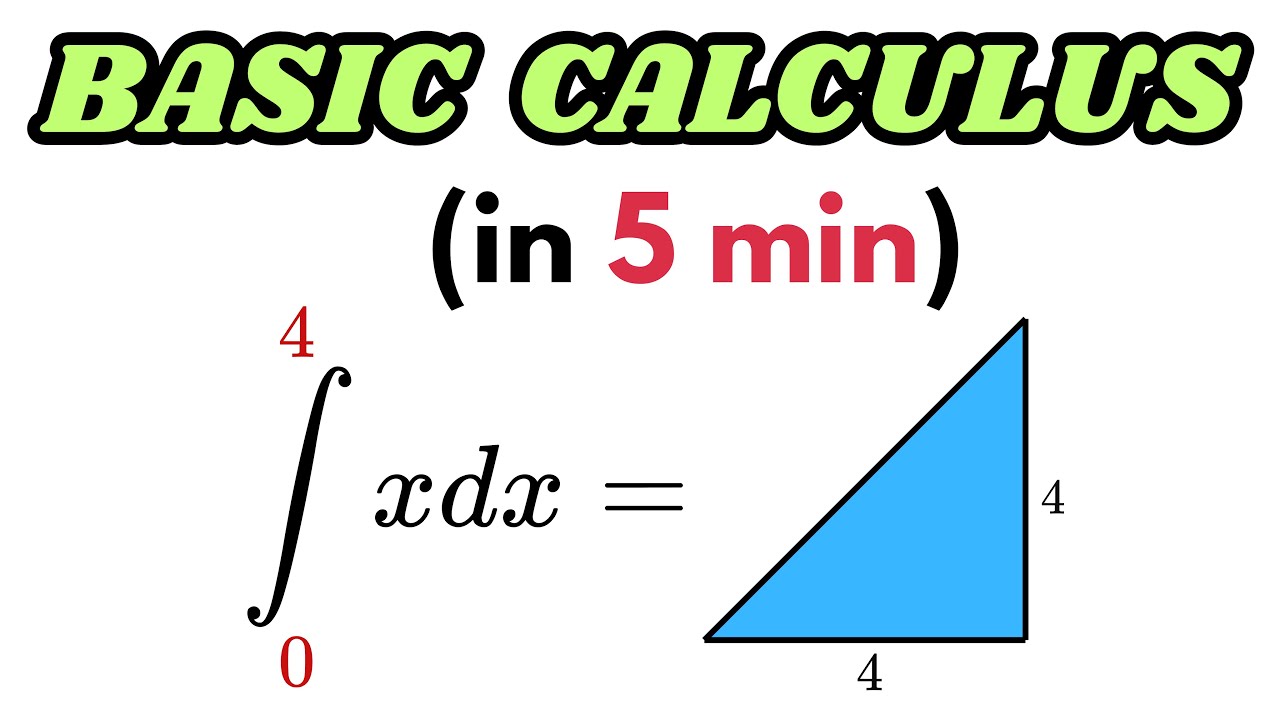
What does it actually mean for a function to "approach" a value? The video "BASIC Math Calculus – Understand Simple Calculus with just Basic Math in 5 minutes!" by Brain Station Advanced breaks down the graphical and numerical interpretations of limits. This short but impactful video shows you how to evaluate limits using simple techniques like direct substitution. It's a great starting point, demonstrating that approaching a value doesn't mean the function has to actually reach it at that exact point. This subtle distinction is a cornerstone of calculus thinking.
- Limits are the fundamental building blocks of calculus.
- Practice evaluating basic limits using substitution.
Study This Video Deeper
Get an AI summary and ask questions about confusing parts in real-time.
Open in Querivo →Decoding Derivatives: The Essence of Rate of Change
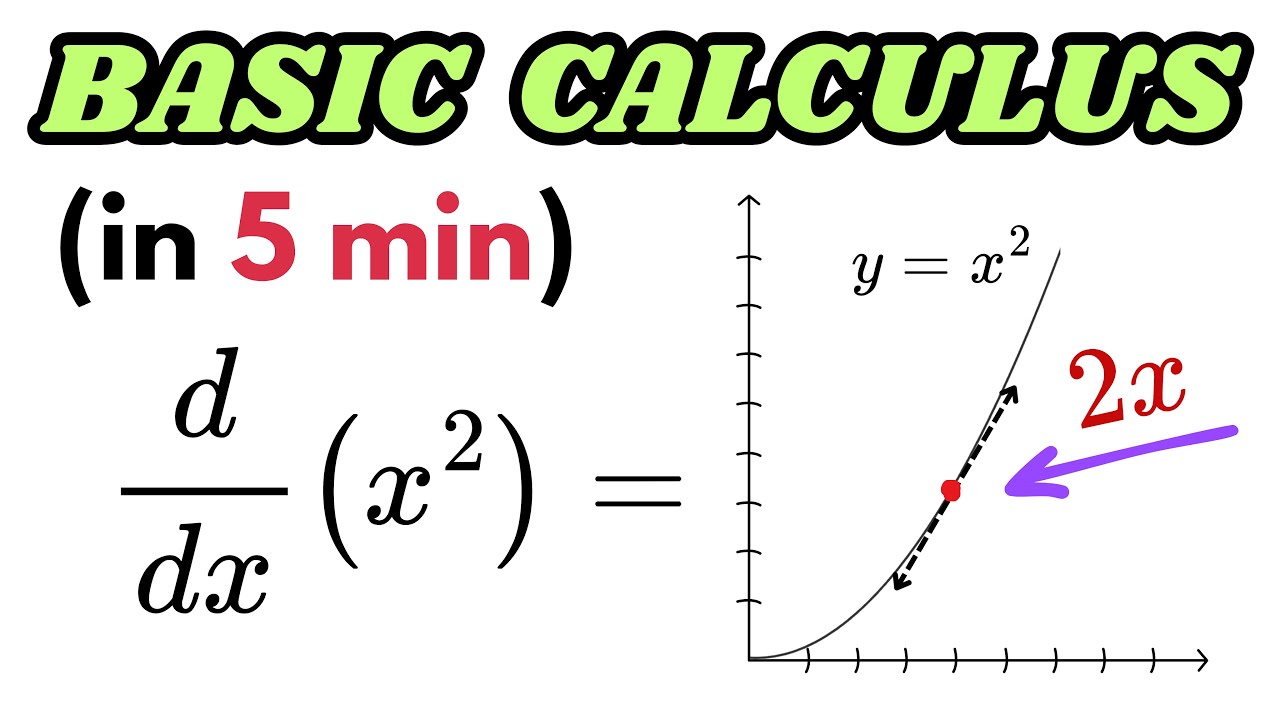
Now, let's dive into derivatives. If limits tell us about function behavior near a point, derivatives tell us about how fast things are changing. The video "Introduction to Calculus (Derivatives)" by Andy Math cuts straight to the chase. It's designed to be an accessible entry point, explaining the geometric idea of a derivative as the slope of a tangent line. Visualizing this concept is key, and this tutorial does a good job of laying it out clearly for beginners.
You'll get a grasp of the formal definition of a derivative using limits – which ties back perfectly to the concept of limits discussed earlier. Plus, this video introduces some of the most common and useful differentiation rules, like the power rule. Knowing these rules is absolutely essential for solving most calculus problems you'll encounter. Seriously, mastering these basic rules is a game-changer for simplifying calculations and making complex problems manageable.

- Derivatives measure the rate of change of a function.
- Learn the power rule for basic differentiation.
Unlocking Antiderivatives: The Gateway to Integration
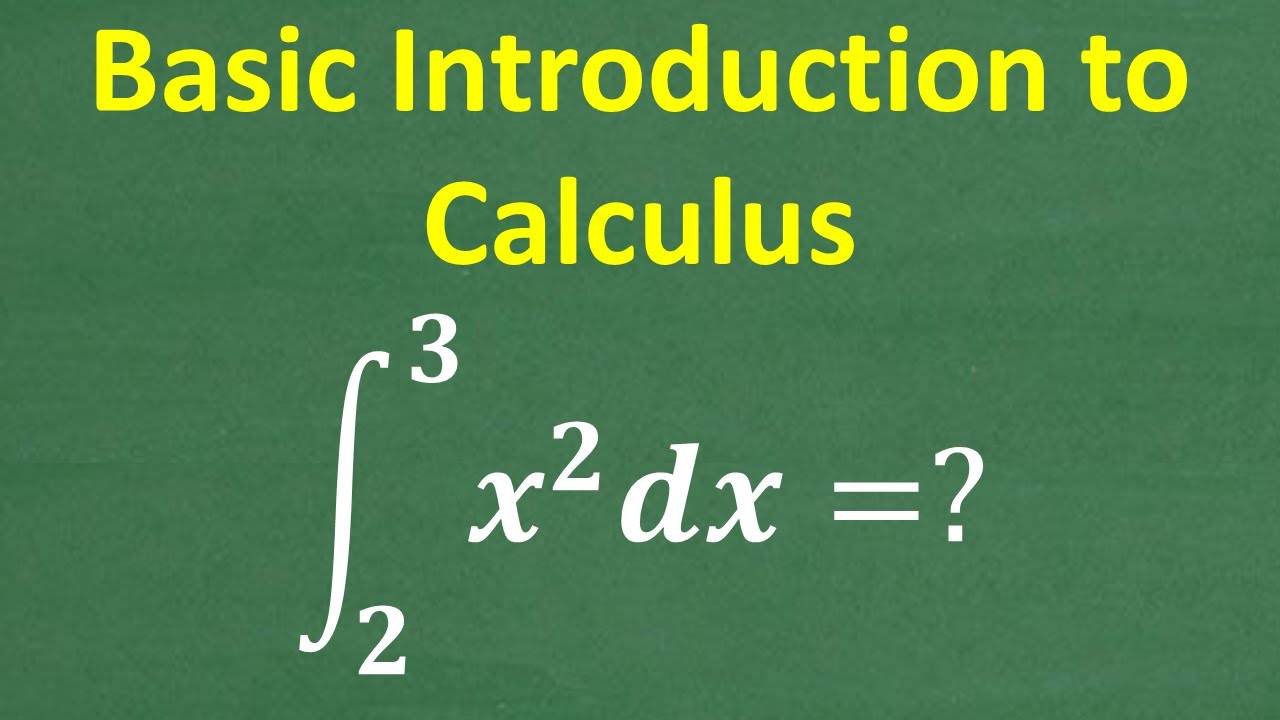
So, we've looked at how to find the rate of change (derivatives). What about going the other way? That's where antiderivatives come in, and they are the crucial step before we can fully grasp integration. The video "BASIC Math Calculus – Understand Simple Calculus with just Basic Math in 5 minutes!" by Brain Station Advanced, which also touched on limits, offers a surprisingly effective overview of antiderivatives. It highlights that finding an antiderivative is simply reversing the differentiation process.
You'll discover why the "+ C" – the constant of integration – is so important. It acknowledges that there are infinitely many possible original functions that could lead to the same derivative. This concept might seem a bit abstract at first, but it's vital for understanding the full picture of integration later on. This video is worth watching just to get this core idea solid before you move deeper into calculus.
- Antiderivatives are the inverse of differentiation.
- Always remember to include the constant of integration ('+ C').
Applying Calculus: Solving Real-World Problems with Related Rates
Calculus isn't just theoretical; it's a powerful tool for modeling the real world. The video "Calculus at a Fifth Grade Level" by Lukey B. The Physics G might have a whimsical title, but don't let that fool you into thinking it's simplistic. It tackles a genuinely complex application of derivatives: related rates. It’s a fantastic example of how we use calculus to solve problems where different quantities are changing with respect to each other simultaneously.
You'll see how to set up equations that link these changing variables and then use techniques like implicit differentiation and the chain rule to find their rates of change. Scenarios like an inflating balloon or a ladder sliding down a wall are used to illustrate these concepts effectively. Watching this will definitely show you the practical punch that Calculus 1 packs. It's truly motivating to see these abstract mathematical ideas come to life in solving tangible problems.

- Related rates problems involve interconnected changing quantities.
- Practice setting up equations and using differentiation to solve.
Your Next Steps
You've now explored the core concepts of Calculus 1: limits, derivatives, and antiderivatives, along with a glimpse into practical applications like related rates. Remember, consistent practice is the absolute key to mastering these topics. These videos provide a solid foundation, but actively applying what you've learned through problem-solving is where true understanding blossoms. Don't be afraid to rewatch sections that are unclear or to seek out additional practice problems.
Your Action Items
- ☐Pick one video from above and watch it on Querivo
- ☐Ask questions and check summaries while watching without breaking your flow
- ☐Use the AI chat to clarify confusing parts and deepen understanding
- ☐Come back for more curated videos on topics you want to master
Ready to put your newfound knowledge to the test? Start practicing with exercises and rewatching these videos whenever you need a refresher! Tackling Calculus 1 is a journey, and with these resources, you're well on your way to success.
Turn Any YouTube Video into an Interactive Lesson
Paste any video link, get an instant AI summary, and ask questions in real-time.
Try Querivo Free →Related Videos You Might Enjoy
Looking for more perspectives on this topic? Here are some additional videos worth checking out: