
Feeling overwhelmed by the abstract world of Calculus 1? You're not alone. This essential university course can be a significant hurdle, but with the right guidance, it becomes navigable and even fascinating. Thankfully, a wealth of excellent YouTube content can illuminate these complex topics. By strategically using these visual and auditory resources, you can build a robust understanding that goes far beyond rote memorization.
Key Takeaways
- 1Master Calculus 1 with expert YouTube lectures.
- 2Understand limits, derivatives, and integrals through clear explanations.
- 3Learn to analyze function behavior and rates of change with practical examples.
- 4Apply calculus concepts to solve real-world problems, seeing the relevance of your studies.
- 5Build a strong foundation for STEM fields by demystifying core calculus principles.
Who this is for
- If you're struggling with the core concepts of Calculus 1 and need supplementary explanations.
- If you're looking for clear, concise, and engaging explanations that go beyond the dry language of your textbook.
- If you're a university student seeking effective online resources to reinforce classroom learning and prepare for exams.
- If you prefer visual and auditory learning styles to grasp abstract mathematical ideas.
Start Learning with AI-Powered Video Summaries
Get instant summaries, ask questions, and turn any video into an interactive study session. Enhance your learning by engaging directly with the content.
Try Querivo Free →Grasping the Essence of Limits: The Foundation of Calculus
Calculus 1 hinges on a single, powerful idea: limits. This video dives deep into what limits truly represent, moving beyond the intuition to the formal definitions. You'll discover how limits help us understand function behavior, especially at points where things might seem undefined or tricky. It's all about understanding what a function approaches as its input gets closer and closer to a certain value. This foundational concept is the bedrock upon which all other calculus principles are built.
This isn't just about abstract theory; understanding limits is your gateway to everything else in calculus. You'll learn to evaluate them using direct substitution and, crucially, algebraic manipulation – a skill that becomes invaluable as the problems get tougher. The video also touches on one-sided limits, which are key for analyzing those pesky discontinuities. Plus, mastering the algebraic limit laws will seriously speed up your calculations and reduce the likelihood of errors. Pay close attention to the examples provided; practicing these techniques will solidify your grasp. It's pretty solid groundwork for your calculus journey, setting you up for success with derivatives and integrals.
- Limits are the fundamental building blocks of calculus, defining function behavior near a point.
- Practice algebraic manipulation extensively to evaluate limits effectively and efficiently.
- Understanding one-sided limits is crucial for analyzing function behavior at critical points.
Building Intuition: What is Calculus and How Does it Work?
Before diving headfirst into the nitty-gritty, it's worth getting the big picture. This video offers a fantastic conceptual overview of Calculus, explaining its core branches – differentiation and integration – with surprisingly simple analogies. It’s designed for absolute beginners, making the subject feel much more accessible and less intimidating. Think of it as a friendly, high-level introduction before you get into the detailed mechanics.
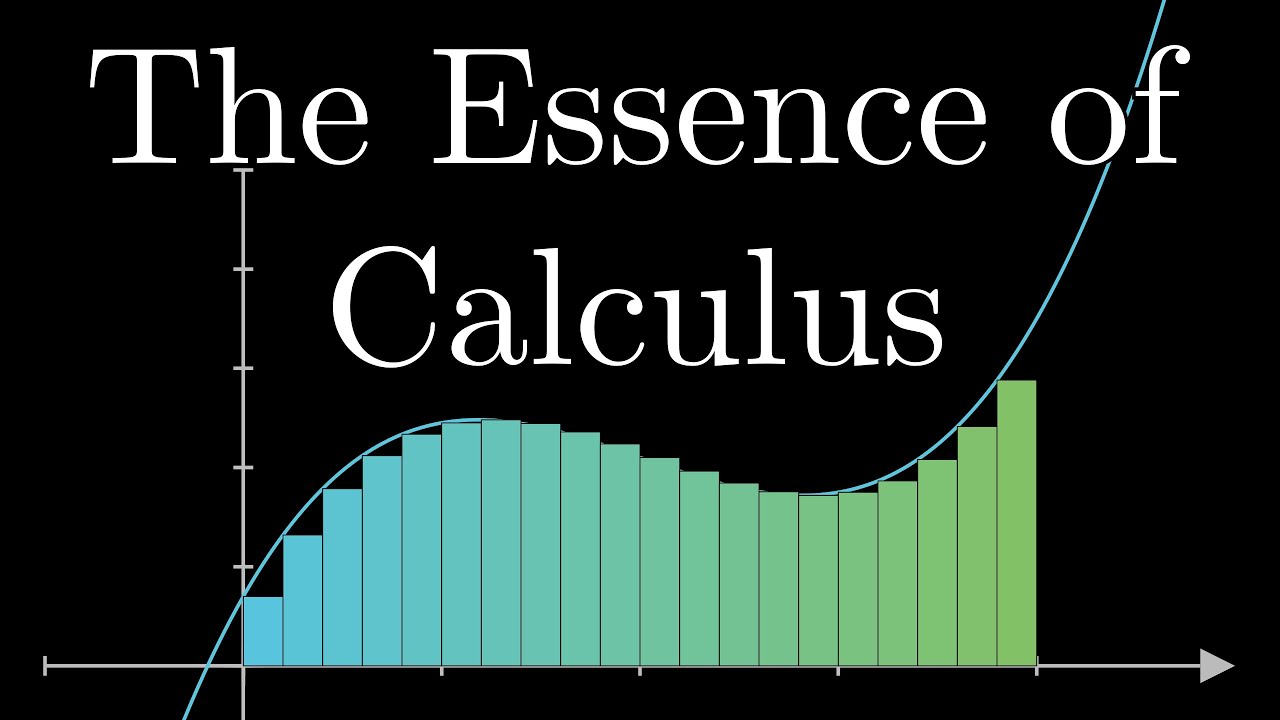
Calculus, at its heart, is the study of change. This video helps you conceptualize derivatives as instantaneous rates of change, essentially the slope of a curve at a single point. Then, it introduces integrals as the accumulation of quantities, visualized as the area under a curve. It’s a great way to appreciate how Calculus allows us to break down complex problems into tiny, manageable, infinitesimal parts. This high-level understanding is invaluable for contextualizing the more technical aspects you'll encounter later.
- Calculus is fundamentally the study of change, enabling us to analyze dynamic systems.
- Visualize derivatives as the instantaneous slope of a tangent line and integrals as the area under a curve.
- This conceptual overview helps demystify the subject and highlight its real-world applications.
Unlocking Derivatives: The Power of Instantaneous Change
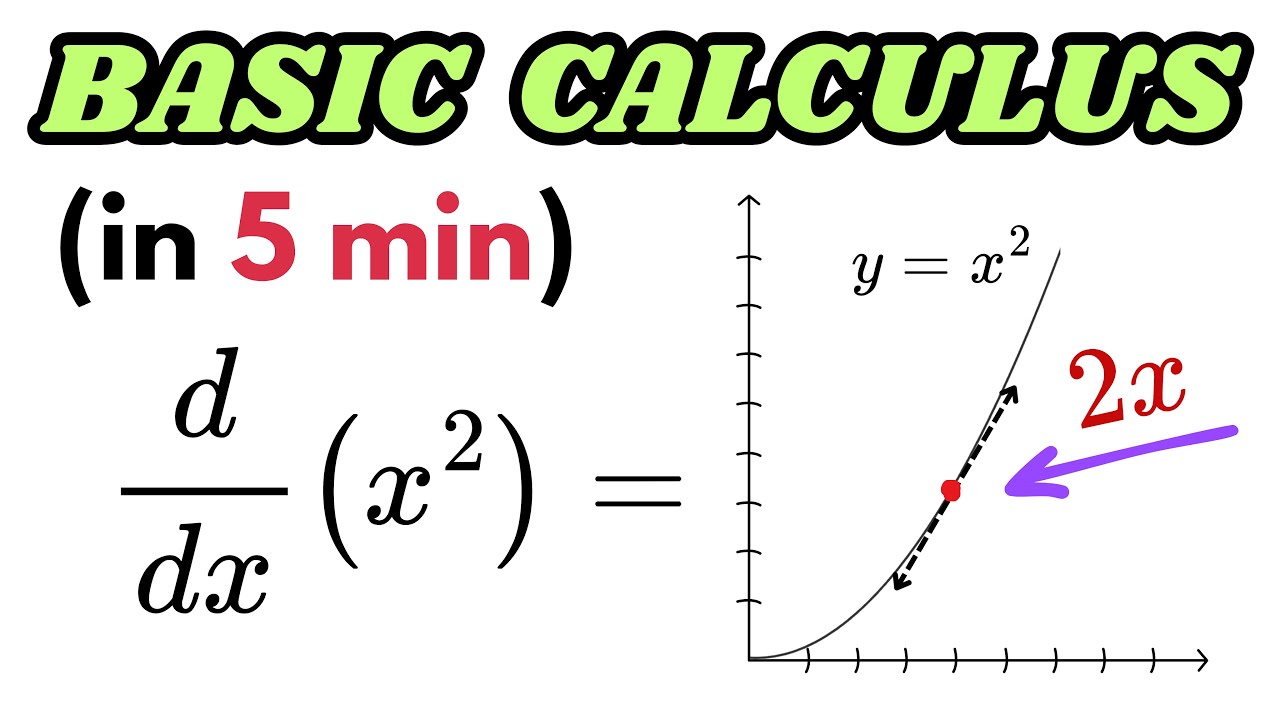
Now that we've got the conceptual framework, let's get more formal. This video zeroes in on the derivative, connecting the intuitive idea of "rate of change" to its rigorous limit definition. Understanding the derivative is absolutely crucial for analyzing how things change over time or space, a core skill in so many scientific and engineering fields. It’s where calculus really starts to show its practical power, allowing us to model and predict phenomena.
You'll see how the concept of 'approach' is formalized using definitions, which might sound intimidating but are really just precise ways to talk about limits and continuity. This video is also a great place to get an introduction to L'Hôpital's rule, a super helpful technique for tackling those tricky indeterminate limit forms that pop up unexpectedly when evaluating derivatives. For anyone looking to truly grasp the meaning behind derivative calculations, and not just the mechanics, this is a must-watch. Remember to pause and work through the examples as they are presented to build your confidence.

- Derivatives formally define the instantaneous rate of change of a function, representing the slope of the tangent line.
- L'Hôpital's rule is a powerful technique for solving indeterminate limits that arise in derivative calculations.
- Focus on understanding the limit definition of the derivative to build a strong theoretical foundation.
Integrating Concepts: Finding Areas and Accumulations
So, we've explored limits and derivatives. What's next? Integration! This video elegantly introduces integration not just as a concept, but as the inverse of differentiation. It’s the tool that allows us to calculate areas under curves and understand the cumulative effect of changes over an interval. This is where the abstract math starts translating into concrete problem-solving, connecting back to the initial conceptual overview.
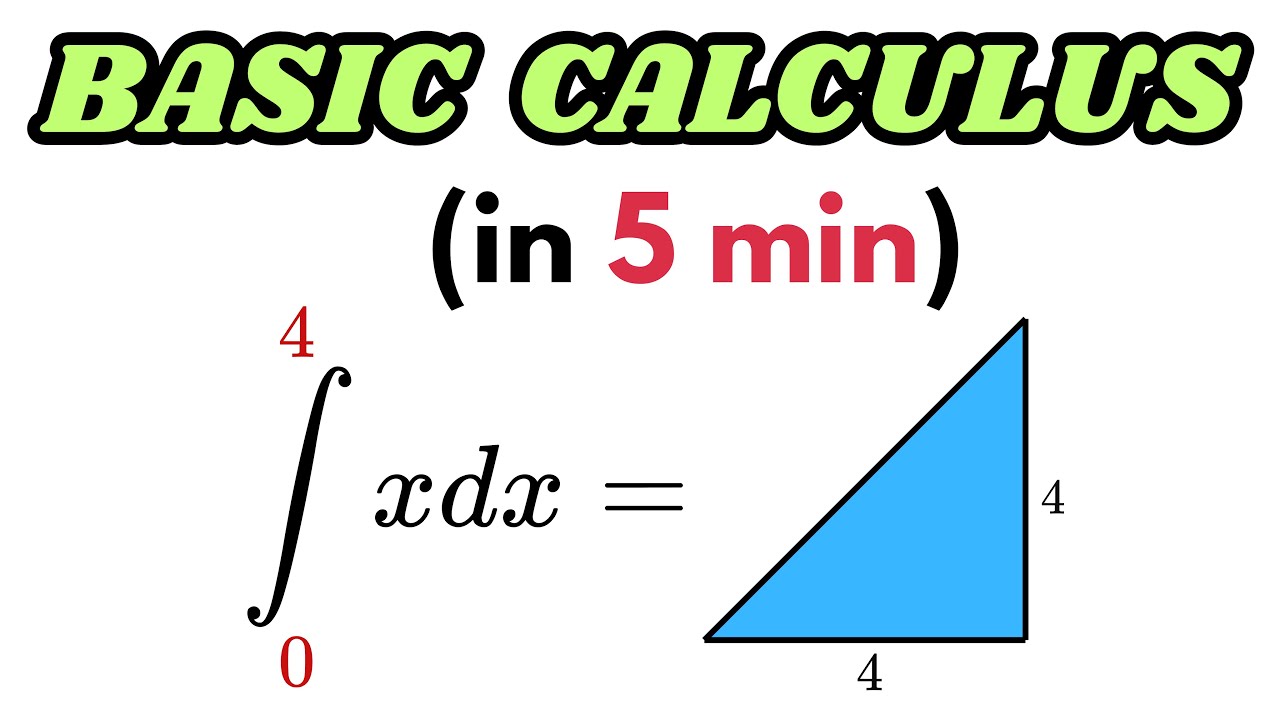
You'll visualize integration as the process of summing up an infinite number of infinitesimally small slices to find a total. This makes calculating areas under curves, a fundamental application, much clearer. It’s also the key to understanding how quantities accumulate over time, whether it’s distance traveled, volume, or any other measurable quantity that changes. Seeing this relationship between derivatives and integrals really ties Calculus 1 together, revealing the elegant duality at the heart of the subject.

- Integration is formally defined as the inverse operation of differentiation, also known as finding the antiderivative.
- Integrals are essential tools for calculating the area under a curve and understanding accumulated quantities over an interval.
- Grasping the relationship between differentiation and integration is key to a comprehensive understanding of Calculus 1.
Your Next Steps
You've now explored the fundamental building blocks of Calculus 1: the critical concept of limits, the power of derivatives to measure change, and the utility of integrals for accumulation. By leveraging these YouTube lectures, you're well-equipped to tackle your university course with confidence. The key is active engagement. Don't just passively watch; interact with the material.
Your Action Items
- ☐Pick one video from above and watch it on Querivo to utilize its interactive features.
- ☐Ask questions and check summaries while watching without breaking your flow; this helps solidify understanding in real-time.
- ☐Use the AI chat to clarify confusing parts and deepen understanding, getting instant explanations tailored to your queries.
- ☐Come back for more curated videos on topics you want to master, creating a personalized learning path.
Ready to solidify your understanding? Start practicing problems and revisiting these lectures to reinforce your learning. The true mastery of calculus comes from consistent practice. Continue your learning journey by exploring practice problems, working through textbook examples, and seeking out additional resources on specific topics you find challenging. Remember, every expert was once a beginner, and with these tools, you're well on your way to becoming proficient.
Turn Any YouTube Video into an Interactive Lesson
Paste any video link, get an instant AI summary, and ask questions in real-time. Transform your study sessions into interactive learning experiences.
Try Querivo Free →Related Videos You Might Enjoy
Looking for more perspectives on this topic? Here are some additional videos worth checking out: