
Tired of writing Python code that feels clunky or inefficient? It's time to move beyond the basics and unlock the true power of this versatile language.
Key Takeaways
- 1Elevate your Python skills with expert-curated video tutorials.
- 2Master efficient code through practical tips and advanced collections.
- 3Learn to build scalable apps with Python concurrency.
- 4Demystify decorators for cleaner, reusable code.
- 5Transform your development workflow with interactive learning tools.
Who this is for
- If you're a Python developer feeling stuck with intermediate concepts
- If you're looking to write more performant and elegant Python code
- If you're aiming to tackle complex software engineering challenges with Python
Start Learning with AI-Powered Video Summaries
Get instant summaries, ask questions, and turn any video into an interactive study session.
Try Querivo Free →Unlock Code Efficiency with 10 Ultimate Python Tips
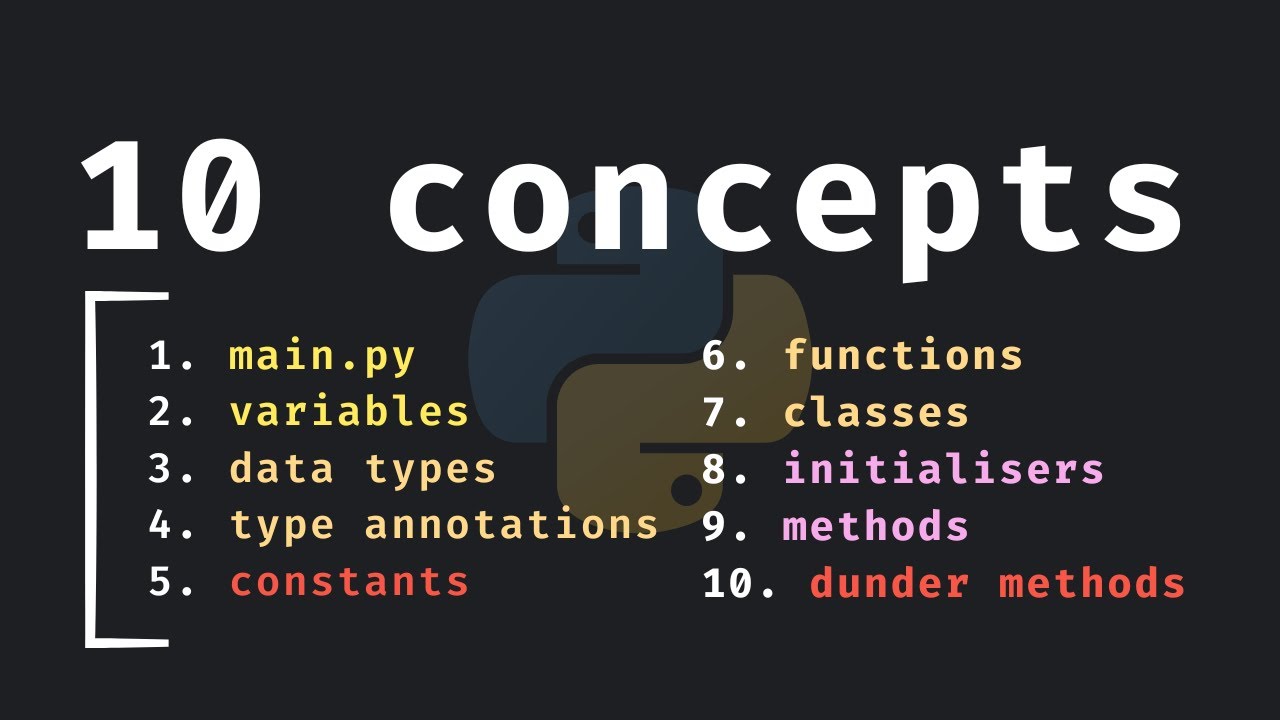
Sometimes, the most significant leaps in coding proficiency come from small, clever tricks. This video dives into ten practical, immediately applicable Python tips that can genuinely make your code read better and run smoother. You'll discover how to use familiar tools in new, efficient ways, often overlooking features that can save you a surprising amount of time and effort.
We're talking about things like using the humble underscore _ for more than just skipping variables – it's a convention that aids readability. Then there are lambda functions, which, when used judiciously, can make your callbacks super concise. Plus, the zip() function is a real game-changer for iterating over multiple lists simultaneously. And for dictionary wrangling, safe access methods like .get() and .setdefault() are essential for avoiding those pesky KeyError exceptions. These are the kinds of tips that, once you see them, you’ll wonder how you coded without them.
This video is a great starting point for anyone who's comfortable with basic Python but wants to start writing code that feels more professional and efficient. It’s about working smarter, not just harder, and these tips definitely contribute to that goal.
Supercharge Your Data Handling with Advanced Python Collections
When standard Python data structures just don't quite cut it, the collections module is your best friend. This video explores specialized container datatypes that offer unique advantages in performance and functionality. It’s about using the right tool for the job, and these advanced collections are definitely the right tools for many common data-handling challenges.
You'll get to know Counter for easily tallying up the frequency of items in a list or string – super handy for data analysis. Then there's namedtuple, which lets you create lightweight objects that you can access by attribute name, making your code much more readable than using plain tuples. And if you've ever dealt with dictionaries where you expect certain keys might be missing, defaultdict is a lifesaver. It automatically creates default values for new keys, preventing errors. Finally, deque offers performant appends and pops from both ends, ideal for queues and stacks.
This is a must-watch for intermediate Python programmers looking to optimize their data processing and make their code more robust. If you're wrestling with repetitive data tasks or looking for ways to speed up your applications, you'll definitely want to check this out.
:::video[UdcPhnNjSEw :::
- Discover specialized Python `collections` module datatypes for enhanced data handling.
- Learn about `Counter`, `namedtuple`, `defaultdict`, and `deque` for efficient coding.
Study This Video Deeper
Get an AI summary and ask questions about confusing parts in real-time.
Open in Querivo →Master Python Concurrency for Scalable Applications
Building applications that feel responsive, especially when dealing with lots of I/O operations or heavy computation, often comes down to mastering concurrency. This video tackles the fundamentals of threading and multiprocessing in Python, which are key to unlocking those scalable, high-performance applications you might be aiming for. It’s a deep dive into how Python handles doing multiple things at once, which isn't always as straightforward as it sounds.
You’ll get a solid grasp of when to use threading for tasks that spend a lot of time waiting for external resources (like network requests or file I/O), and when multiprocessing is the better choice for CPU-bound tasks that need to crunch numbers. The creator breaks down the concepts clearly, helping you understand the underlying mechanisms and, importantly, how to manage these concurrent operations effectively. Avoiding common pitfalls is crucial here, and the guidance provided is really solid.
If you're looking to build more robust web servers, data processing pipelines, or any application where responsiveness is key, this video is definitely worth your time. It’s a foundational topic for advanced Python development.
:::video[I72uD8ED73U :::
- Understand the core concepts of Python threading and multiprocessing.
- Learn strategies for building more responsive and scalable applications.
Demystifying Python Decorators for Elegant Code
Python decorators are a powerful feature that allows you to modify or enhance functions or methods in a clean and reusable way. Think of them as a way to wrap other functions, adding pre- or post-processing logic without altering the original function's code. This video is all about breaking down how they work and how you can leverage them to write more elegant and maintainable Python code.
You'll delve into the syntax and the underlying mechanism of decorators, understanding exactly what happens when you apply one. The creator demonstrates practical applications, showing how decorators can be used for common tasks like logging function calls, enforcing access control, or even measuring performance. Crucially, you'll learn how to create your own custom decorators, which is where their true power lies for enhancing code modularity. This is a concept that might seem a bit abstract at first, but with the right explanation, it really clicks.
This video is particularly beneficial if you're working on larger Python projects where code organization and reusability are paramount. It's a key technique for writing Pythonic, sophisticated code.
:::video[F2Mx-u7auUs :::
- Learn the syntax and practical applications of Python decorators.
- Understand how to create custom decorators for enhanced code modularity.
Your Next Steps
Your Action Items
- ☐Pick one video from above and watch it on Querivo
- ☐Ask questions and check summaries while watching without breaking your flow
- ☐Use the AI chat to clarify confusing parts and deepen understanding
- ☐Come back for more curated videos on topics you want to master
By integrating these advanced Python techniques – from efficient collections and elegant decorators to the intricacies of concurrency – you can unlock a new level of power, readability, and performance in your code. The curated YouTube videos we've highlighted offer clear, expert guidance to help you master these crucial concepts.
Turn Any YouTube Video into an Interactive Lesson
Paste any video link, get an instant AI summary, and ask questions in real-time.
Try Querivo Free →Related Videos You Might Enjoy
Looking for more perspectives on this topic? Here are some additional videos worth checking out:
10 Important Python Concepts In 20 Minutes
:::video[Gx5qb1uHss4/video?lang=en" class="video-card-link">
- Master practical Python tips for improved code readability and efficiency.
- Implement underscore conventions, lambda functions, `zip()`, and safe dictionary access.
Supercharge Your Data Handling with Advanced Python Collections
When standard Python data structures just don't quite cut it, the collections module is your best friend. This video explores specialized container datatypes that offer unique advantages in performance and functionality. It’s about using the right tool for the job, and these advanced collections are definitely the right tools for many common data-handling challenges.
You'll get to know Counter for easily tallying up the frequency of items in a list or string – super handy for data analysis. Then there's namedtuple, which lets you create lightweight objects that you can access by attribute name, making your code much more readable than using plain tuples. And if you've ever dealt with dictionaries where you expect certain keys might be missing, defaultdict is a lifesaver. It automatically creates default values for new keys, preventing errors. Finally, deque offers performant appends and pops from both ends, ideal for queues and stacks.
This is a must-watch for intermediate Python programmers looking to optimize their data processing and make their code more robust. If you're wrestling with repetitive data tasks or looking for ways to speed up your applications, you'll definitely want to check this out.
:::video[UdcPhnNjSEw :::
- Discover specialized Python `collections` module datatypes for enhanced data handling.
- Learn about `Counter`, `namedtuple`, `defaultdict`, and `deque` for efficient coding.
Study This Video Deeper
Get an AI summary and ask questions about confusing parts in real-time.
Open in Querivo →Master Python Concurrency for Scalable Applications
Building applications that feel responsive, especially when dealing with lots of I/O operations or heavy computation, often comes down to mastering concurrency. This video tackles the fundamentals of threading and multiprocessing in Python, which are key to unlocking those scalable, high-performance applications you might be aiming for. It’s a deep dive into how Python handles doing multiple things at once, which isn't always as straightforward as it sounds.
You’ll get a solid grasp of when to use threading for tasks that spend a lot of time waiting for external resources (like network requests or file I/O), and when multiprocessing is the better choice for CPU-bound tasks that need to crunch numbers. The creator breaks down the concepts clearly, helping you understand the underlying mechanisms and, importantly, how to manage these concurrent operations effectively. Avoiding common pitfalls is crucial here, and the guidance provided is really solid.
If you're looking to build more robust web servers, data processing pipelines, or any application where responsiveness is key, this video is definitely worth your time. It’s a foundational topic for advanced Python development.
:::video[I72uD8ED73U :::
- Understand the core concepts of Python threading and multiprocessing.
- Learn strategies for building more responsive and scalable applications.
Demystifying Python Decorators for Elegant Code
Python decorators are a powerful feature that allows you to modify or enhance functions or methods in a clean and reusable way. Think of them as a way to wrap other functions, adding pre- or post-processing logic without altering the original function's code. This video is all about breaking down how they work and how you can leverage them to write more elegant and maintainable Python code.
You'll delve into the syntax and the underlying mechanism of decorators, understanding exactly what happens when you apply one. The creator demonstrates practical applications, showing how decorators can be used for common tasks like logging function calls, enforcing access control, or even measuring performance. Crucially, you'll learn how to create your own custom decorators, which is where their true power lies for enhancing code modularity. This is a concept that might seem a bit abstract at first, but with the right explanation, it really clicks.
This video is particularly beneficial if you're working on larger Python projects where code organization and reusability are paramount. It's a key technique for writing Pythonic, sophisticated code.
:::video[F2Mx-u7auUs :::
- Learn the syntax and practical applications of Python decorators.
- Understand how to create custom decorators for enhanced code modularity.
Your Next Steps
Your Action Items
- ☐Pick one video from above and watch it on Querivo
- ☐Ask questions and check summaries while watching without breaking your flow
- ☐Use the AI chat to clarify confusing parts and deepen understanding
- ☐Come back for more curated videos on topics you want to master
By integrating these advanced Python techniques – from efficient collections and elegant decorators to the intricacies of concurrency – you can unlock a new level of power, readability, and performance in your code. The curated YouTube videos we've highlighted offer clear, expert guidance to help you master these crucial concepts.
Turn Any YouTube Video into an Interactive Lesson
Paste any video link, get an instant AI summary, and ask questions in real-time.
Try Querivo Free →Related Videos You Might Enjoy
Looking for more perspectives on this topic? Here are some additional videos worth checking out:
10 Important Python Concepts In 20 Minutes
:::video[Gx5qb1uHss4/maxresdefault.jpg" alt="Video" loading="lazy" onerror="this.onerror=null;this.src='https://img.youtube.com/vi/3cUkvFKYbHE :::
- Master practical Python tips for improved code readability and efficiency.
- Implement underscore conventions, lambda functions, `zip()`, and safe dictionary access.
Supercharge Your Data Handling with Advanced Python Collections
When standard Python data structures just don't quite cut it, the collections module is your best friend. This video explores specialized container datatypes that offer unique advantages in performance and functionality. It’s about using the right tool for the job, and these advanced collections are definitely the right tools for many common data-handling challenges.
You'll get to know Counter for easily tallying up the frequency of items in a list or string – super handy for data analysis. Then there's namedtuple, which lets you create lightweight objects that you can access by attribute name, making your code much more readable than using plain tuples. And if you've ever dealt with dictionaries where you expect certain keys might be missing, defaultdict is a lifesaver. It automatically creates default values for new keys, preventing errors. Finally, deque offers performant appends and pops from both ends, ideal for queues and stacks.
This is a must-watch for intermediate Python programmers looking to optimize their data processing and make their code more robust. If you're wrestling with repetitive data tasks or looking for ways to speed up your applications, you'll definitely want to check this out.
:::video[UdcPhnNjSEw :::
- Discover specialized Python `collections` module datatypes for enhanced data handling.
- Learn about `Counter`, `namedtuple`, `defaultdict`, and `deque` for efficient coding.
Study This Video Deeper
Get an AI summary and ask questions about confusing parts in real-time.
Open in Querivo →Master Python Concurrency for Scalable Applications
Building applications that feel responsive, especially when dealing with lots of I/O operations or heavy computation, often comes down to mastering concurrency. This video tackles the fundamentals of threading and multiprocessing in Python, which are key to unlocking those scalable, high-performance applications you might be aiming for. It’s a deep dive into how Python handles doing multiple things at once, which isn't always as straightforward as it sounds.
You’ll get a solid grasp of when to use threading for tasks that spend a lot of time waiting for external resources (like network requests or file I/O), and when multiprocessing is the better choice for CPU-bound tasks that need to crunch numbers. The creator breaks down the concepts clearly, helping you understand the underlying mechanisms and, importantly, how to manage these concurrent operations effectively. Avoiding common pitfalls is crucial here, and the guidance provided is really solid.
If you're looking to build more robust web servers, data processing pipelines, or any application where responsiveness is key, this video is definitely worth your time. It’s a foundational topic for advanced Python development.
:::video[I72uD8ED73U :::
- Understand the core concepts of Python threading and multiprocessing.
- Learn strategies for building more responsive and scalable applications.
Demystifying Python Decorators for Elegant Code
Python decorators are a powerful feature that allows you to modify or enhance functions or methods in a clean and reusable way. Think of them as a way to wrap other functions, adding pre- or post-processing logic without altering the original function's code. This video is all about breaking down how they work and how you can leverage them to write more elegant and maintainable Python code.
You'll delve into the syntax and the underlying mechanism of decorators, understanding exactly what happens when you apply one. The creator demonstrates practical applications, showing how decorators can be used for common tasks like logging function calls, enforcing access control, or even measuring performance. Crucially, you'll learn how to create your own custom decorators, which is where their true power lies for enhancing code modularity. This is a concept that might seem a bit abstract at first, but with the right explanation, it really clicks.
This video is particularly beneficial if you're working on larger Python projects where code organization and reusability are paramount. It's a key technique for writing Pythonic, sophisticated code.
:::video[F2Mx-u7auUs :::
- Learn the syntax and practical applications of Python decorators.
- Understand how to create custom decorators for enhanced code modularity.
Your Next Steps
Your Action Items
- ☐Pick one video from above and watch it on Querivo
- ☐Ask questions and check summaries while watching without breaking your flow
- ☐Use the AI chat to clarify confusing parts and deepen understanding
- ☐Come back for more curated videos on topics you want to master
By integrating these advanced Python techniques – from efficient collections and elegant decorators to the intricacies of concurrency – you can unlock a new level of power, readability, and performance in your code. The curated YouTube videos we've highlighted offer clear, expert guidance to help you master these crucial concepts.
Turn Any YouTube Video into an Interactive Lesson
Paste any video link, get an instant AI summary, and ask questions in real-time.
Try Querivo Free →Related Videos You Might Enjoy
Looking for more perspectives on this topic? Here are some additional videos worth checking out:
10 Important Python Concepts In 20 Minutes
:::video[Gx5qb1uHss4/hqdefault.jpg'" />